What Pilots Actually Look for in a Rental Aircraft (Beyond the Hourly Rate)
March 14, 2026
The hourly rate is always the first number a pilot asks about. It is also, consistently, the least important factor in whether a rental arrangement is actually worth using.
An experienced pilot who has rented aircraft for any length of time develops a more nuanced checklist — one that has almost nothing to do with the sticker on the scheduling board. They want to know whether the avionics are reliable or whether the GPS freezes mid-flight. They want to know whether the aircraft they reserved will actually be available when they show up. They want to know whether maintenance issues are documented and addressed promptly, or quietly logged and left for the next renter to discover mid-preflight. They want to know whether they can build genuine familiarity with a specific airframe rather than adapting to a different aircraft configuration every time.
This piece is an honest look at what those criteria actually are, why they matter more than the rate, what aircraft rental actually costs in today’s general aviation market, and what pilots should understand about insurance before they sign a rental agreement.
The cheapest rental rate in your area is not a bargain if you’re spending your first ten minutes in the cockpit relearning an avionics setup you’ve never seen before.
How Much Does It Cost to Rent a Plane? A Realistic Picture
Aircraft rental cost in the United States varies significantly by aircraft type, avionics configuration, geographic market, and whether the rate is quoted wet (fuel included) or dry (fuel billed separately). Understanding this structure is the first practical piece of aircraft rental advice that matters.
For training-category two-seaters like the Cessna 152 or older Piper Tomahawk, rental rates typically start around $90 to $130 per hour wet. The four-seat workhorse of general aviation, the Cessna 172 Skyhawk, generally runs $130 to $185 per hour depending on avionics fit and aircraft age — a 172 equipped with a Garmin G1000 glass panel will typically sit at the higher end of that range compared to one with a standard six-pack analog panel. Step up to a more capable four-seater like the Diamond DA40 and you’re looking at $150 to $200 per hour. High-performance singles and complex aircraft can run $200 to $350 per hour or more.
The wet-versus-dry distinction is worth understanding before you compare rates across providers. A dry rate appears lower on paper, but fuel costs are added at the local fuel price after the flight. In most cases, the all-in cost of a dry rental in a fuel-efficient aircraft works out to roughly the same as a wet rate — though in markets with high avgas prices or on longer flights, it can be meaningfully different either direction. Ask for clarity on how the rate is structured and what the average all-in cost per hour actually looks like before treating a lower dry rate as a genuine bargain.
There are also several costs that don’t appear in the hourly rate that pilots should budget for. CFI time for the initial checkout flight, which most reputable rental operations require for each new aircraft type, typically runs $50 to $80 per hour for the instructor’s time on top of the aircraft rate. Overnight or cross-country minimums at many FBOs require payment for a minimum number of flight hours per day even if you fly less. Some providers charge separately for headset use, flight planning tools, or briefing time.
None of this means renting is expensive in context. Compared to aircraft ownership — where insurance, hangar or tie-down fees, annual inspections, maintenance reserves, and unexpected repair costs layer on top of the purchase price — renting a well-maintained aircraft on a per-flight basis is almost always the more economical choice for pilots flying under roughly 100 to 150 hours per year. The real question is not whether renting makes financial sense. It almost always does. The question is whether you’re renting the right aircraft from the right provider.
What Experienced Pilots Look for When Evaluating Aircraft Rental
1. Avionics reliability and consistency
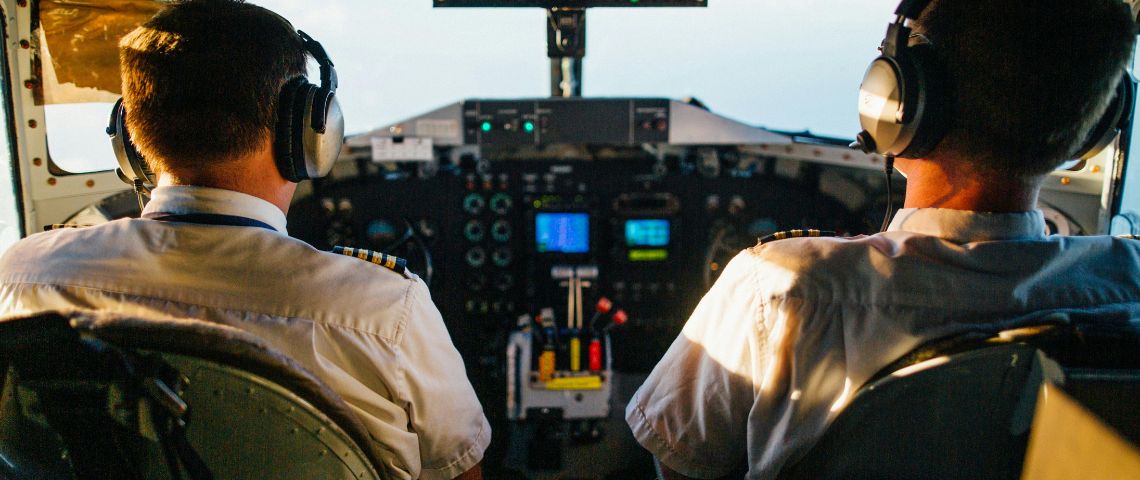
Ask any experienced renter pilot what frustrates them most about general aviation rental fleets and avionics reliability is near the top of nearly every list. Rental aircraft, particularly in high-utilization flight school environments, get used hard. Avionics systems take a beating from repeated power cycling, student-pilot handling, and the accumulated hours of training operation. The result, in many fleets, is that avionics reliability is genuinely unpredictable: a GPS that worked on Tuesday may have developed a freezing issue by Friday, or a nav radio that was functioning during someone’s morning cross-country has a squawk that wasn’t reported.
For a pilot flying recreationally, a malfunctioning audio panel is an annoyance. For a pilot building instrument time, working toward a rating, or planning a cross-country that depends on specific navigation equipment, unreliable avionics is a flight-canceling problem that doesn’t announce itself until you’re already at the airport. The time cost of a failed aircraft — the drive, the preflight, the discovery, the rescheduling — often exceeds the hourly rate differential between a well-maintained and a poorly-maintained aircraft.
What experienced pilots actually look for: a consistent avionics configuration across flights in the same aircraft, a provider that documents avionics squawks and addresses them before releasing the aircraft, and — ideally — a single aircraft they know well enough to detect when something is functioning differently than normal.
“Avionics squawks get normalized in high-volume rental environments. Pilots stop reporting them because nothing happens when they do. That’s the environment we specifically didn’t want to build. If something isn’t right in the aircraft, it doesn’t fly until it is. That’s not a policy statement — it’s just how you run a single-aircraft operation where your reputation is tied to one airframe.”
— Harbour Dollinger, Founder, Kodiak Aviation | Falcon Field, Mesa, AZ
2. Maintenance transparency
The maintenance history of a rental aircraft is something most new pilots never think to ask about and most experienced pilots consider essential. Under FAA regulations, aircraft used for rental or compensation must have a 100-hour inspection in addition to the standard annual inspection — meaning a high-utilization rental aircraft may receive a thorough mechanical review every few weeks. What varies enormously between providers is how that maintenance is documented, communicated, and made available to renters.
A provider with genuine maintenance transparency will have maintenance logs readily accessible, will be able to tell you when the last 100-hour was completed and what was addressed, will proactively communicate any deferred items and their status, and will have a clear squawk reporting system that renters can actually use without worrying that reporting a problem will result in them being blamed for it.
The absence of this transparency is itself a signal. A rental provider that is vague about maintenance history, that has a logbook that doesn’t reflect regular attention, or that treats a renter’s squawk report as an inconvenience rather than useful safety data is telling you something about how the aircraft is managed overall. As the FAA is explicit about: as pilot-in-command, you are ultimately responsible for the airworthiness of the aircraft. You cannot discharge that responsibility if you don’t have access to honest information about its maintenance state.
3. Aircraft familiarity and single-aircraft consistency
One of the underappreciated advantages of renting a single, consistent aircraft — rather than rotating through a fleet — is the familiarity that builds over repeated exposure to the same airframe. Every aircraft has a specific personality. Its power settings behave differently from another aircraft of the same make and model that has accumulated more hours or been rigged slightly differently. Its trim sensitivity, its approach speed tendencies, its tendency to float or settle in the flare, the exact feel of its controls in a crosswind — all of these are things a pilot develops precise intuition for through repeated experience with the same airplane.
In a large rental fleet, that familiarity is constantly reset. A pilot who flies a 172 one week and a different 172 the next week is not flying the same aircraft with different tail numbers. They are adapting anew each time — spending the first portion of each flight reacquiring the specific handling characteristics of that particular airframe rather than building on a foundation of genuine familiarity.
This matters most during the phases of flight where things can go wrong: the approach, the roundout, the flare, the crosswind correction. A pilot who knows exactly how their aircraft responds in those moments is working from deep pattern recognition. A pilot in an unfamiliar aircraft is working from general training overlaid with real-time adaptation. The difference in precision and margin is real.
There is a meaningful difference between knowing how to fly a Cessna 172 and knowing how to fly this specific Cessna 172. The second kind of familiarity takes repeated time in the same aircraft — and it shows up precisely when you need it most.
4. Aircraft availability and reliability
Experienced pilots do not assume that a reserved aircraft will be available when they arrive. They have been burned too many times by the economics of high-utilization rental fleets: the aircraft that went unserviceable during the previous flight and won’t be released until maintenance signs it off, the previous renter who came back late, the aircraft that’s been pulled for a maintenance item that turned up during the morning preflight.
What looks like a simple scheduling convenience question is actually a significant factor in whether a pilot can maintain the flying regularity that keeps their skills sharp. A pilot who intends to fly twice a week but finds their reserved aircraft unavailable one out of three times they show up is not flying twice a week — they’re flying significantly less than they planned, with all the skill-maintenance consequences that come with it. A provider whose aircraft is consistently available as scheduled, because it is maintained proactively rather than reactively, removes one of the most persistent structural barriers to flying regularly.
5. Modern, capable avionics
The avionics suite of a rental aircraft affects more than convenience — it affects what a pilot learns and how transferable those skills are. A pilot building hours toward a commercial certificate or airline career in an aircraft with a glass cockpit panel like the Garmin Perspective+ is developing intuition with the avionics architecture they will encounter professionally. A pilot flying exclusively in analog aircraft is building solid fundamental skills but will face a steeper transition when they eventually move to the technology that dominates the modern training and professional environment.
The FAA recognized this explicitly in 2018 when it revised 14 CFR Part 61 to allow aeronautical experience acquired in technically advanced aircraft (TAA) to count toward certain commercial pilot certification requirements. The regulatory rationale was straightforward: time in aircraft equipped with modern glass cockpit avionics builds a category of skills — automation management, integrated flight planning, glass-panel situational awareness — that analog time alone does not.
For pilots who are aware of where they are in their training progression and where they intend to go, the avionics suite of their rental aircraft is a career development decision, not just a preference. Flying glass isn’t more impressive than flying steam gauges — it builds a different, complementary set of capabilities that matter as pilot workload and mission complexity increase.
6. The checkout process and ongoing relationship
How a rental operation handles the initial checkout flight is a reasonable proxy for how they operate overall. A checkout that is thorough, aircraft-specific, and run by an instructor who genuinely knows the aircraft and its systems is a sign of a provider that takes the rental relationship seriously. A checkout that is perfunctory — a quick once-around to confirm the pilot can make a landing — is a sign that the provider’s interest in the pilot’s actual preparedness is minimal.
Beyond the initial checkout, the ongoing relationship with the provider matters. Can you reach someone when a question comes up? Is scheduling frictionless or a source of constant friction? Is the person you talk to knowledgeable about the aircraft, or are they just managing a calendar? The rental market in general aviation ranges from large impersonal FBO operations where you may never speak to the same person twice to smaller operations where the person scheduling your flight is the same person who flew the aircraft that morning. Those two experiences are not equivalent, and the difference shows up in the quality of information you get and the level of accountability you can expect.
Aircraft Rental Insurance: What It Is and Why You Need It

Aircraft rental insurance is one of the most misunderstood topics in general aviation, largely because many pilots operate under a false assumption: that the FBO’s or flight school’s insurance policy covers them as the renter pilot. It does not.
The aircraft owner’s insurance policy is designed to protect the aircraft and the owner’s interests. If a renter damages the aircraft and the owner’s insurer pays the claim, that insurer has the right to subrogate — to pursue the renter directly to recover what they paid. A pilot who taxied into a hangar wall, experienced a hard landing that caused prop damage, or lost directional control on rollout and struck another aircraft can find themselves personally liable for costs that easily reach $10,000 to $50,000 or more, regardless of whether the aircraft’s owner was insured.
What renters insurance covers
Non-owned aircraft insurance, also called aircraft renters insurance or personal non-owned (PNO) coverage, provides two core types of protection. The first is liability coverage — protection against claims from third parties for bodily injury or property damage that results from your operation of the aircraft. This includes bystanders, but typically does not include passengers unless passenger liability is added to the policy. Common liability limits range from $250,000 per occurrence at the entry level to $1,000,000 per occurrence for more comprehensive coverage.
The second type is aircraft damage liability — coverage for physical damage you cause to the rented aircraft itself. This is not automatically included in a standard liability policy; it must be added separately. Coverage amounts typically range from $5,000 to $200,000 and should be calibrated to the value of the aircraft you fly. An SR20 or similarly capable single-engine aircraft is worth significantly more than a training-fleet 172, and the damage liability limit on your policy should reflect that.
Personal injury to yourself is generally not covered under standard renters policies — pilots who want that protection need to add a medical payments endorsement or carry separate health coverage that does not exclude aviation activities.
What renters insurance costs
Aircraft rental insurance is significantly more affordable than most pilots assume, and the cost is modest relative to the exposure it covers. A basic liability-only policy starts around $80 to $120 per year. A more comprehensive policy covering liability at $1,000,000 per occurrence plus $50,000 in aircraft damage coverage typically runs $250 to $350 annually — less than the cost of a single flight hour in most rental aircraft. Full coverage at higher limits can reach $500 or more per year depending on pilot experience, aircraft type, and coverage amounts.
Premiums are influenced primarily by total pilot hours, time in make and model, certificate level, and the types of aircraft covered by the policy. More experienced pilots with clean records pay significantly less than newer pilots or students — a dynamic that creates a compounding incentive to build hours consistently, since doing so lowers both the real-world risk and the insurance cost simultaneously.
“Every pilot renting from us needs to understand the insurance picture before they fly. The aircraft is covered. You, personally, are not covered by the aircraft’s policy. If something happens and you don’t have your own renters coverage, you’re exposed. That’s not a scare tactic — it’s just the actual structure of how aviation insurance works.”
— Harbour Dollinger, Founder, Kodiak Aviation | Falcon Field, Mesa, AZ
What renters insurance does not cover
Renters policies have meaningful exclusions that pilots need to understand before they rely on coverage. Operations outside your certificate and ratings are not covered — a private pilot flying IFR into IMC without an instrument rating, or acting as PIC of an aircraft requiring an endorsement they don’t hold, is operating outside the scope of their policy. Wear and tear and mechanical failure are excluded; the coverage is for accident-related damage caused by pilot action, not for the cost of a failed alternator or a tire that blew on landing due to pre-existing wear. Aircraft types not specifically approved by the policy may not be covered, which matters for pilots who fly multiple aircraft types.
Reading the exclusions in a renters policy is not optional. The policies are short enough to read in twenty minutes and the differences between providers are meaningful. AOPA, through its partnership with AssuredPartners Aerospace, Avemco, and BWI Aviation Insurance are among the established providers in the market, with policies that can be bound online in a short application process. SkyWatch offers flexible short-term coverage for pilots who fly infrequently and prefer daily or monthly policies over annual ones.
Practical Aircraft Rental Tips for Pilots at Every Level
Ask the maintenance question before the rate question
Before you ask how much it costs to rent a plane at a given operation, ask when the last 100-hour inspection was completed and whether you can see the maintenance logs. The answer — and the ease or reluctance with which it is provided — tells you more about the quality of the rental operation than the hourly rate does. A provider who is immediately forthcoming with maintenance history and can explain the current status of any open squawks is a provider who runs their maintenance properly. Vagueness or deflection is a signal worth taking seriously.
Understand what wet vs. dry means for your actual all-in cost
Do the arithmetic before comparing rates across providers. A wet rate at $185/hour is straightforwardly comparable. A dry rate at $155/hour with avgas at $7.50 per gallon in a Cessna 172 that burns roughly 9 gallons per hour adds approximately $67.50 in fuel, making the true cost $222.50 per hour — substantially more than the wet rate appears to save. The wet-versus-dry comparison changes with fuel prices and aircraft fuel burn, so run the actual numbers for the aircraft and market you’re in rather than defaulting to the lower-looking number.
Do your own thorough preflight regardless of what you’re told
As pilot-in-command, you are legally and practically responsible for the airworthiness of the aircraft you fly. The FBO saying the aircraft is ready does not transfer that responsibility. A thorough preflight is not a formality — it is the mechanism by which you, as the person making the go/no-go decision, confirm that the aircraft is in the condition you need it to be in for your planned flight. This is especially important in high-utilization rental fleets where the previous renter may not have reported a discrepancy, may have mishandled something, or where maintenance attention is stretched across many aircraft.
Take notes during your preflight. Photograph anything that looks ambiguous. Report discrepancies in writing. The habit of documenting the aircraft’s condition when you take it and when you return it protects you against being attributed responsibility for damage you did not cause.
Build familiarity by sticking with one aircraft when possible
If you have the option to consistently rent the same specific aircraft, take it. The aircraft-specific familiarity that builds over repeated exposure to the same airframe is not trivial — it translates directly into smoother operations, better performance in demanding conditions, and the kind of intuitive feel for the aircraft’s behavior that only comes from genuine time in that specific airplane. This is especially true during crosswind operations, approach and landing, and any situation where the aircraft’s response to your control inputs matters at a precision level.
Where a provider offers a single aircraft or a small fleet of identical configuration, that consistency is built into the arrangement. Where you’re choosing from a large mixed fleet, build your own consistency by requesting the same tail number each time and treating each flight as an opportunity to deepen your understanding of that specific airplane, not just to accumulate hours in the category.
Understand the checkout requirement and take it seriously
Every reputable rental operation will require a checkout flight with a CFI before allowing you to rent an unfamiliar aircraft. This requirement exists for good reasons, and the checkout itself is an opportunity, not a hurdle. Use it to ask specific questions about the aircraft’s systems, its known handling characteristics, any quirks in the avionics or powerplant, and the specific procedures the provider expects renters to follow. A thorough checkout is the fastest path to genuine familiarity with a new aircraft, and a CFI who knows the airplane well is the most efficient way to get there.
Carry your own renters insurance before your first flight
The single most overlooked practical step in aircraft rental preparation is obtaining non-owned aircraft insurance before flying. It takes less time to bind a policy than to complete a preflight, costs less than a single flight lesson annually, and covers an exposure that most pilots do not think about until they’re looking at a repair estimate that runs to five figures. The FBO’s insurance does not protect you. This is not a complex situation — it is a straightforward gap that an affordable policy closes completely.
The pilots who get surprised by their insurance exposure after an incident are almost always the ones who assumed the FBO’s coverage extended to them. It does not. A $100 annual premium is not a meaningful barrier to closing that gap.
Why the Quality of the Rental Relationship Matters More Than the Rate
The general aviation rental market in the United States spans an enormous range of quality. On one end are large flight school operations with aging fleets, high utilization rates, variable maintenance attention, and an approach to the rental relationship that is primarily transactional. On the other end are smaller operations — often single-aircraft or small-fleet providers — where the person you call is the person who flew the aircraft that morning, where maintenance is handled with genuine accountability, and where the renter’s experience of the aircraft is treated as a reflection of the provider’s standards.
The hourly rate differential between these two ends of the market is often smaller than pilots expect — and the quality differential is larger. A pilot who pays $20 more per hour for an aircraft that is reliably available, consistently maintained, avionics-current, and operated by a provider who answers questions with specificity rather than platitudes is not overpaying. They are paying for the conditions that actually allow them to fly consistently, build real familiarity, and develop the quality of skills that makes every hour logged genuinely worth having.
The pilots who look back on their flight training and early logbook years with the most satisfaction are not the ones who found the cheapest hourly rates. They are the ones who found an aircraft and an operation that made flying consistently accessible, enjoyable, and genuinely educational — and then flew it as often as their schedule and budget allowed. The aircraft rental decision is not just a cost decision. It is a decision about the environment in which your skills develop, the reliability of the tool you’re using to develop them, and whether the overall experience reinforces or erodes your relationship with flying.
See What a Properly Maintained Rental Aircraft Actually Feels Like.
Kodiak Aviation operates a single 2021 Cirrus SR20 G6 (N701YZ) at Falcon Field (KFFZ) in Mesa, AZ, available at $285/hour wet. One aircraft. Consistent avionics. Transparent maintenance. If you’ve been flying in rental fleets where squawks are normal and reliability is unpredictable, the difference is worth experiencing.
Our FAA-certified Cirrus Flight Simulator is available at $100/hour for instrument currency and emergency procedure practice — loggable, weather-independent, and always in the same configuration as the aircraft.
📍 Falcon Field (KFFZ), Mesa, AZ | 📞 (480) 568-3795 | ✉️ info@localhost
Book at kodiakaviationco.com
Sources and references: AOPA, “Green to Gold: Aircraft Rental Guide”; FAA 14 CFR Part 61 (aircraft rental currency and proficiency requirements); FAA 14 CFR Part 91 (annual inspection and 100-hour inspection requirements for aircraft used for hire); Pilot Institute, “Aircraft Renters Insurance Explained”; BWI Aviation Insurance, “Airplane Renter Insurance Complete Guide”; AssuredPartners Aerospace renter policy documentation; SkyWatch Aviation Insurance; Pilotmall.com, “How Much Is It to Rent a Plane”; Jeff Air Pilot Services, “Aircraft Rental Costs and Safety Requirements”; Islander Aviation, “The Non-Owner’s Guide to Rental Aircraft”. Rate ranges reflect general aviation market data as of 2025.
Aircraft Rental at Falcon Field: Everything You Need to Know About KFFZ
READ STORY