Flying Regularly vs. Flying Occasionally: Why Gaps Can Hold Pilots Back
March 16, 2026
Most pilots, if they’re being honest, know the feeling. Life gets busy — work, travel, family, finances — and the gap between flights quietly grows from two weeks to six weeks to three months. You’re still legal on paper. The certificate is in your wallet. The medical is valid. But when you finally settle into the left seat again, something feels slightly off. You’re working harder than usual. The scan feels effortful instead of automatic. The radio call you’ve made a hundred times takes a beat longer to formulate.
That experience has a name in aviation safety literature: skill fade. And its effects on both technical performance and pilot confidence are well-documented, more significant than most occasional pilots realize, and almost entirely preventable with consistent access to an aircraft.
This piece looks honestly at what happens when pilots fly infrequently, why those gaps matter more than the regulatory minimums suggest, and what it actually takes to stay sharp — technically, situationally, and mentally — in the cockpit.
Currency keeps you legal. Proficiency keeps you safe. The FAA is explicit about this distinction — and the gap between the two is where most general aviation risk quietly accumulates.
What the Regulations Require — and What They Don’t
The FAA’s currency requirements under 14 CFR §61.57 are straightforward. To carry passengers as pilot-in-command, a private pilot must have made at least three takeoffs and three landings within the preceding 90 days, in the same category and class of aircraft. Night currency adds the requirement that those three landings be to a full stop between one hour after sunset and one hour before sunrise. Instrument currency requires six approaches, holding procedures, and intercepting and tracking navigational courses within the preceding six calendar months. A flight review — at minimum one hour of flight and one hour of ground with a CFI — is required every 24 calendar months.
These are not trivial requirements. They exist because the FAA recognizes that flying skills are perishable and that some minimum standard of recent practice is necessary for safe operation. But the regulations are equally explicit about something the requirements themselves do not guarantee: currency is not the same as proficiency.
The AOPA has stated this distinction plainly — currency means meeting the legal threshold to act as pilot-in-command; proficiency means being genuinely competent to do so safely across the range of conditions you might encounter. A pilot who completed three touch-and-goes last week is current. A pilot who completed three touch-and-goes last week after a three-month gap, on a calm day at a familiar airport, under ideal conditions, may be current but is not necessarily sharp.
Three takeoffs and three landings in 90 days is a floor, not a standard of excellence. The question that matters more is what happened in the 89 days before those three landings.
“The 90-day rule tells you the minimum. It doesn’t tell you anything about whether you actually had a good flight. A pilot who flew once in three months to tick the currency box is a different pilot than one who flew eight times. Both are ‘current.’ Only one of them is genuinely ready.”
— Harbour Dollinger, Founder, Kodiak Aviation | Falcon Field, Mesa, AZ
Skill Fade: What It Is and How Fast It Happens
Skill fade — the technical term used by aviation safety organizations including SKYbrary, EASA, and the International Federation of Airworthiness — refers to the measurable decay of learned skills during periods of disuse. It is not a character flaw or a sign of weakness. It is a normal feature of how human memory and motor learning work, and it affects every pilot at every experience level.
The rate of skill fade is not uniform across all competencies. Research consistently identifies a hierarchy of which skills erode fastest and which tend to persist.
What fades first
The skills that deteriorate most rapidly during gaps in flying are the ones that require dynamic, real-time application under pressure. Workload management — the ability to prioritize tasks, allocate attention across multiple simultaneous demands, and stay ahead of the aircraft — is among the first to show degradation. So is situational awareness, particularly the mental model a pilot maintains of position, traffic, weather, and energy state in a changing environment.
Manual flying precision — the smoothness and accuracy of control inputs, especially during high-workload phases like approach and landing — also fades meaningfully with extended gaps. Radio communication fluency degrades in subtler ways: the cadence becomes less natural, the phrasing less automatic, the mental load slightly higher. None of these individual degradations is catastrophic on its own. The problem is that they compound. A pilot managing slightly elevated workload with slightly degraded situational awareness in slightly unfamiliar conditions is a pilot with substantially less margin than they believe they have.
The EASA’s 2021 Skills and Knowledge Degradation safety analysis identified a specific secondary effect that captures this compounding dynamic precisely: as proficiency decays, performing tasks correctly demands more cognitive effort than it did before. Highly skilled pilots rely on spare mental capacity — the cognitive bandwidth left over after routine tasks are handled automatically — to manage unexpected situations, assess developing risks, and make good decisions under pressure. When that spare capacity is being consumed by tasks that were previously automatic, the pilot’s ability to respond to the unexpected is quietly compromised.
What tends to persist
It is worth being precise about what skill fade is not. It does not mean that a pilot who has been away from the cockpit for two months has forgotten how to fly. Procedural knowledge — the sequence of actions for a normal checklist, the structure of an approach, the correct response to a specific emergency — is more resistant to fade than motor skills and dynamic situational awareness. Experienced pilots with deep long-term knowledge generally retain more of their knowledge base during gaps than newer pilots, though their motor skills may degrade at comparable rates.
The insidious part of skill fade, documented in multiple studies, is the gap between how degraded a pilot actually is and how degraded they perceive themselves to be. A Flight Safety Foundation study of 30 airline pilots asked each to perform five basic instrument maneuvers without automation, then assessed both their performance and their self-reported confidence. All 30 performed below ATP certification standards. The vast majority believed they were still proficient. The gap between perceived and actual capability is not unusual in skill fade research — it is one of its most consistent findings.
The most dangerous flight training gap is not the one a pilot knows about. It’s the one they’ve normalized — the gap that’s grown long enough that the degraded state starts to feel like the baseline.
The Confidence Dimension: What Skill Fade Does to Your Head
Technical degradation is the part of skill fade that aviation safety literature focuses on most, because it is the part that shows up in accident statistics and incident reports. But there is a parallel dimension that affects pilots in ways that are less visible in the data: what extended gaps do to a pilot’s relationship with their own confidence in the cockpit.
Gold Seal flight instructor Brian Schiff, who has written extensively about pilot proficiency for AOPA, has observed that skill degradation does not occur as quickly as confidence degradation. A pilot who has been away from the cockpit for six months has not lost most of their actual flying ability. They have, however, lost a disproportionate amount of the confidence that made flying feel comfortable and natural. The cockpit that used to feel like a familiar environment starts to feel slightly foreign. The aircraft that was once an extension of the pilot’s thinking demands more deliberate attention. The margin that used to feel generous starts to feel tighter.
This is not irrational. The pilot’s nervous system is registering something accurate: their procedural automaticity is not where it was, their situational picture takes longer to build, their scan feels less fluent. The problem is that confidence loss, unlike skill degradation, tends to compound in a different direction. Skill loss is often gradual and partially recoverable within a few flights. Confidence loss can linger longer — and during the period when it lingers, it creates its own set of risks.
Anxiety, avoidance, and the erosion cycle
A pilot who feels genuinely uncomfortable in the cockpit is a pilot at risk of a specific behavioral pattern that worsens the underlying problem: avoidance. The cockpit feels unfamiliar and taxing, so the pilot delays their next flight. The delay extends the gap. The gap deepens the unfamiliarity. The next flight, when it finally happens, feels harder than the last. The cycle reinforces itself.
Aviation medicine professionals who study pilot mental health have documented a version of this pattern — the way that subclinical anxiety about performance, heightened by irregular flying, can create the kind of hesitation and self-doubt that themselves degrade cockpit performance. A pilot who is actively worried about whether they’re going to make a good landing is a pilot who is not fully focused on flying the approach. The anxiety is not separate from the skill problem; it is part of it.
The research on pilot mental health more broadly has found that the aviation culture’s emphasis on stoicism and performance — the expectation that a pilot should always present as confident and capable — can make it harder for pilots to acknowledge, even to themselves, that an extended gap has made them uncomfortable. Pilots with irregular schedules who feel rusty may not identify what they’re experiencing as a mental health dimension at all. They simply know that flying doesn’t feel as good as it used to, and they’re not entirely sure they want to confront why.
The connection between consistent flying and psychological comfort in the cockpit is real and worth taking seriously. Regular flying does not just maintain skills — it maintains the neurological familiarity with the cockpit environment that makes flying feel natural and enjoyable rather than effortful and stressful.
“I’ve had pilots come back after several months away and you can see it the moment they taxi. They’re tense. The controls feel foreign to them. The radio’s an effort. It usually takes two or three good flights to shake that out — and those flights need to go well, in a familiar airplane that’s working correctly. That’s not the time to be dealing with squawks.”
— Harbour Dollinger, Founder, Kodiak Aviation | Falcon Field, Mesa, AZ
What Frequent Flying Actually Builds
The case for flying regularly is usually framed in the negative: what you lose when you don’t. But the positive case is at least as important, and it’s worth making explicitly. Consistent, frequent flying does not just maintain a skill floor. It actively builds capability across dimensions that infrequent flying cannot develop at all.
Automaticity and spare mental capacity
When a pilot flies regularly, the routine elements of cockpit management — the scan, the radio calls, the traffic pattern, the checklist flows — become genuinely automatic. Automaticity is not just efficiency; it is the mechanism that creates spare mental capacity. A pilot whose routine tasks run in the background of their attention has cognitive resources available for what is not routine: the unexpected traffic conflict, the developing weather, the clearance that doesn’t match the filed route, the passenger who needs reassurance at a critical moment.
Spare mental capacity is what allows a pilot to stay ahead of the aircraft rather than chasing it. It is the difference between a pilot who notices a deviation early and corrects it smoothly, and one who notices it late and corrects it urgently. Aviation safety literature across every category — general aviation, commercial, military — converges on the same finding: the pilots who manage unexpected situations best are the ones who were not cognitively saturated by the expected ones.
Pattern recognition and anticipatory judgment
Experienced, frequently flying pilots develop a form of pattern recognition that is nearly impossible to describe to someone who has not experienced it. They read a weather picture differently than a pilot who has seen fewer hours of actual sky. They recognize a developing crosswind earlier. They sense when a traffic pattern is going to be tighter than expected before the geometry becomes obvious. They know, from something built over hundreds of hours of consistent exposure, when something is slightly off — and they make adjustments before the slightly off becomes a problem.
This anticipatory judgment is not a talent that pilots either have or don’t. It is built through consistent exposure to varied conditions — through hours of flight where the pilot is genuinely engaged with what is happening, not just maintaining altitude and following the highway. Long gaps in flying erode this pattern recognition, not because the pilot forgets what they’ve seen, but because the live updating that keeps it sharp stops happening.
Consistency with a specific aircraft
There is a specific dimension of consistent flying that gets less attention than it deserves: the value of regular time in the same aircraft. Every aircraft has a personality. Its power settings feel different from another’s. Its trim sensitivity, its tendency to float on roundout, its response to crosswind corrections, the way its avionics present information — all of these are things that a pilot builds precise intuition for through repeated exposure. That aircraft-specific intuition is part of what makes flying feel effortless rather than effortful.
A pilot who rents a different aircraft every time they fly — or who returns to the same aircraft after months away — is essentially resetting that intuition each time. The technical knowledge transfers, but the motor memory and the intuitive feel for that specific airplane has to rebuild. Consistency with a single, well-maintained aircraft is one of the simplest and most underrated factors in maintaining genuine proficiency rather than just regulatory currency.
Why Pilots Stop Flying Regularly — and Why It’s Rarely About Wanting To
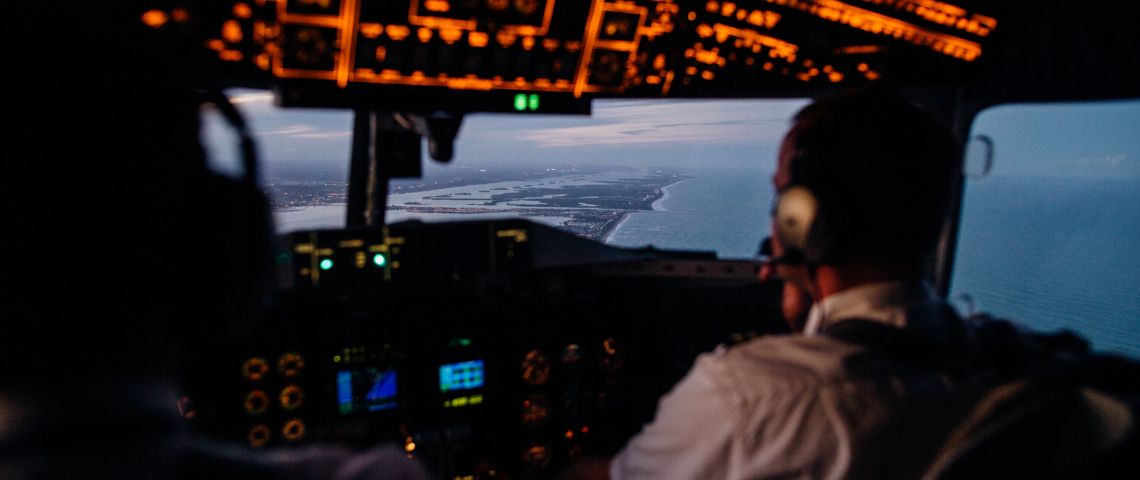
It would be easy to frame the problem of flight training gaps as a motivation issue — pilots who simply don’t prioritize getting to the airport. But the reality, documented across multiple studies of general aviation pilot behavior, is considerably more practical. The most common reasons pilots fly infrequently have less to do with motivation than with access.
Aircraft availability and reliability
For pilots who rely on flight school or FBO rental fleets, aircraft availability is a persistent friction point. Aircraft that are frequently scheduled, poorly maintained, or that go unserviceable without warning make consistent flying genuinely difficult. A pilot who has blocked two hours on a Tuesday morning, driven to the airport, and then discovered that the aircraft they planned to fly has an unresolved squawk has not lost their motivation to fly — they have lost the specific flight they planned. Repeat that experience enough times and the pilot starts scheduling flights less frequently, because the perceived cost of the drive and the frustration is high relative to the uncertain probability of actually getting airborne.
This is not a small problem in the general aviation training market. The average rental aircraft in the United States is significantly older than what a pilot will fly professionally. Maintenance standards vary widely. Availability in popular scheduling windows is genuinely competitive. The pilot who wants to fly twice a week to stay sharp is competing against student pilots, other renters, and maintenance windows for the same aircraft.
Scheduling and the life friction problem
The other barrier is simpler and harder to solve: life. Work schedules, family obligations, weather, and the cost of flying all create real friction that accumulates into gaps. A pilot who intends to fly every ten days will, over the course of a year, find that the average gap stretches to three or four weeks due to nothing more dramatic than competing priorities and imperfect weather.
This is where easy, frictionless access to a reliable aircraft changes the behavioral equation. A pilot who knows that an aircraft is consistently available, consistently in good condition, and consistently familiar — because it’s the same aircraft they flew last time and the time before — faces a much lower activation energy for each flight. The decision to fly is easier when you trust that the aircraft will be there, will be flyable, and will feel familiar the moment you sit down.
The cost of flying regularly in a well-maintained aircraft is not just the hourly rate. It’s also the cost of maintaining the skills and the confidence that make every flight genuinely safe and genuinely enjoyable — and the cost of losing them is paid in ways that don’t show up on an invoice.
Simulators as a Practical Tool for Closing Flight Training Gaps
One of the most underutilized resources available to general aviation pilots trying to maintain proficiency during gaps is the FAA-certified flight simulator. For pilots who understand what simulators are good at, they represent a meaningful and cost-effective bridge between flights — and, in some cases, a more effective training environment than the aircraft itself for specific skill categories.
Instrument currency is the clearest example. Under FAR §61.57, instrument approaches, holding procedures, and navigation tracking can all be accomplished in an approved simulator or flight training device. For a pilot whose instrument currency is expiring but who hasn’t had a convenient weather window to fly actual approaches, an hour in a certified simulator accomplishes the regulatory requirement and, if used intentionally, the proficiency goal as well.
But the value extends beyond currency. Emergency procedures — the scenarios that pilots most need to have deeply ingrained and least have the opportunity to practice in the aircraft — can be rehearsed repeatedly in a simulator without consequence. A pilot who has practiced an engine failure at a specific point in the departure corridor, run the failure to engine start procedure a dozen times, and worked through a partial panel approach can approach the real aircraft with a level of procedural confidence that time between flights alone cannot provide.
The research on this is specific. Pilots who trained in FAA-certified simulators showed meaningfully higher rates of correct emergency procedure execution than those who had not used simulator training. The reason is not that the simulator makes pilots better in abstract — it is that the simulator allows for the kind of deliberate, repeatable practice that aviation emergencies demand but that actual aircraft operations cannot safely provide.
“The simulator gets used two different ways. Some pilots use it to just log time. The better pilots use it to practice the things they can’t practice in the airplane — the emergencies, the partial panel work, the approaches in actual IMC conditions. That’s where it pays for itself. The skill that’s there when it matters is the skill you’ve actually practiced when it didn’t.”
— Harbour Dollinger, Founder, Kodiak Aviation | Falcon Field, Mesa, AZ
Coming Back: How to Return After a Long Gap
For pilots who have already accumulated a significant gap and are now thinking about getting back in the air, the return requires more deliberate thought than the simple legal checklist suggests. Meeting the currency requirements is the beginning of the process, not the end of it.
Be honest with yourself before you brief
The hardest part of returning after a long gap is not the actual flying — it is the honest self-assessment that should precede it. How long has it been, really? Not since the last logbook entry, but since the last flight that felt genuinely sharp. What conditions are you planning to fly in? Is this a solo currency flight in VMC at a familiar airport, or are you planning to bring passengers somewhere with a forecast that’s doing something interesting? Are you rust-spotting, or are you flying?
Aviation decision-making research has consistently found that pilots underestimate their skill degradation after gaps — the confidence-versus-actual-capability gap documented in the Flight Safety Foundation’s instrument skills study is characteristic of how pilots generally assess their post-gap state. Building in an honest assessment of what the gap means, rather than defaulting to “I’m current, I’m fine,” is the first step in a safe return.
Use the first flight back as a training flight
The first flight after a meaningful gap should be treated as a proficiency exercise, not a normal flight. That means flying with a CFI if the gap has been long or if the return conditions are anything other than ideal. It means choosing a simple route, a familiar airport, and conditions that leave a lot of margin. It means debriefing afterward with honest attention to what felt automatic and what required more effort than it should have.
Several flights are typically required after a significant gap before a pilot returns to genuine baseline proficiency. Research from a 2022 study of airline pilots returning from pandemic-related groundings found that pilots typically reported meaningful improvement in workload management confidence after approximately six flights, with continued improvement beyond that. The return is a process, not an event — and treating it as such, with a consistent aircraft and intentional objectives each flight, is what makes it stick.
Rebuild the routine deliberately
Once back, the goal is to establish a flying rhythm that is sustainable — not the most ambitious schedule possible, but one that is realistic given the competing demands of a real life. For most general aviation pilots, something in the range of two to three flights per month is sufficient to maintain genuine proficiency, provided those flights are varied and deliberate. One currency flight every six weeks is not a rhythm; it is a series of recovery exercises separated by gaps.
The practical key is reducing the friction of each individual flight. An aircraft that is consistently available, consistently maintained, and consistently familiar eliminates the access barriers that turn good intentions into long gaps. A simulator that is loggable and available regardless of weather closes the instrument currency window. The combination of both — a reliable aircraft for regular flying and a certified simulator for instrument practice and emergency procedure work — gives a pilot the infrastructure to stay genuinely sharp year-round without treating each flight as a major logistical event.
Frequent Flying and Pilot Mental Health
The connection between flying regularity and psychological wellbeing in the cockpit is not often discussed directly in the general aviation community, partly because the culture around pilot mental health has historically emphasized disclosure risk over honest conversation. But the relationship is real and worth naming.
Flying regularly — in an aircraft that is familiar, in conditions that feel manageable, with skills that are genuinely current — is a fundamentally different psychological experience from flying occasionally after a gap. The pilot who is comfortable and sharp in the cockpit is a pilot who is present, attentive, and genuinely engaged with the task of flying. The pilot who is anxious about whether their skills are where they need to be is managing two things simultaneously: the flight itself and their own internal performance evaluation.
That dual load matters. Aviation medicine literature has documented that even subclinical levels of anxiety — the kind that does not show up in a clinical screening but is present as background stress — measurably affect cognitive performance, reduce situational awareness, and increase the likelihood of slips and errors. A pilot does not need to be experiencing a diagnosable condition for their mental state to affect their flying. They just need to feel uncomfortable.
The most straightforward intervention for that specific kind of flying-related discomfort is not clinical. It is more flying, in familiar conditions, in an aircraft that feels like home. The research on skill and confidence recovery after gaps consistently finds that the return of confidence lags slightly behind the return of actual skill — but that both return, reliably, with consistent practice. The path from uncomfortable to comfortable in the cockpit is through the cockpit, not around it.
Regular flying is not just a training strategy. For many pilots, it’s also the most effective mental health tool available — the thing that keeps the cockpit feeling like a place they belong rather than a place they’re performing for.
Staying Sharp Means Staying Consistent
The gap between flying regularly and flying occasionally is not just a gap in logbook entries. It is a gap in workload management, in situational awareness, in motor memory, in pattern recognition, and in the simple psychological comfort that makes flying safe and enjoyable rather than effortful and stressful. All of those gaps are real, and none of them are fully captured by the three-landings-in-90-days standard that the regulations require.
The good news is that these gaps are also among the most preventable problems in general aviation. They do not require perfection — a pilot who flies twice a month in a consistent aircraft, who uses a simulator for instrument practice and emergency work, and who approaches each flight as a genuine training event is not accumulating significant skill fade. They are maintaining the kind of foundational proficiency that makes flying genuinely safe rather than just technically legal.
The pilots who fly well year after year are not the ones with the most natural talent. They are the ones who have built a sustainable rhythm — who treat access to an aircraft as a tool for maintaining something real, not just as a logbook event — and who have made consistent, quality flying a normal part of how they live, rather than an occasional aspiration they return to when circumstances allow.
Stay Current. Stay Comfortable. Stay Sharp.
Kodiak Aviation operates a 2021 Cirrus SR20 G6 (N701YZ) at Falcon Field (KFFZ) in Mesa, AZ — available for rental at $285/hour wet. Our FAA-certified Cirrus Flight Simulator is available separately at $100/hour for instrument currency, emergency procedure practice, and keeping your scan sharp between flights, regardless of weather or scheduling.
Easy access to a consistently maintained, modern aircraft is the single most effective tool for closing flight training gaps before they compound. If you’ve been away from the cockpit longer than you’d like, we’re a straightforward path back.
📍 Falcon Field (KFFZ), Mesa, AZ | 📞 (480) 568-3795 | ✉️ info@localhost
Book your session at kodiakaviationco.com
Sources and references: FAA 14 CFR §61.57 (recent flight experience, pilot-in-command currency requirements); AOPA, “Currency vs. Proficiency”; AOPA, “Mitigating Skill Fade” (2022); SKYbrary, “Skill Fade”; EASA/FAA/Eurocontrol, Skills and Knowledge Degradation Safety Issue Report (2021); Flight Safety Foundation, “Diminishing Skills” — instrument flying skills study (airline pilots performing below ATP standards); PMC study of 234 airline pilots, COVID-related grounding and return-to-flight proficiency recovery; International Federation of Airworthiness, Skill Fade Safety Notice; FAA Pilot Mental Fitness guidelines; PMC, “Understanding Pilots’ Perceptions of Mental Health Issues” (2024). All regulatory citations reflect current 14 CFR Part 61 requirements.
Aircraft Rental at Falcon Field: Everything You Need to Know About KFFZ
READ STORY