Glass Cockpits, Analog Skills, and the Modern Pilot’s Learning Curve
March 13, 2026
There is a version of this conversation that aviation has been having for two decades, and it usually goes one of two ways. Either glass cockpits are celebrated as a revolution that makes flying safer and more accessible, or they are treated with suspicion as a source of automation dependency that is quietly eroding the fundamentals. Both positions contain real insight, and both, taken alone, miss the more useful point.
The honest answer is that glass cockpit training and analog training are not in competition. They develop different and complementary capabilities, and the pilots who emerge best prepared for the full range of what aviation demands — from private flying to professional careers — are the ones who understand both systems well enough to use each intentionally.
This piece covers what a glass cockpit actually is and how it differs from an analog panel, what the research and flight training experience actually show about learning on each, where glass cockpit training provides genuine advantages that analog time cannot replicate, where analog fundamentals remain irreplaceable, and how the modern pilot should think about the relationship between the two as they progress through their training.
The debate isn’t glass versus analog. It’s whether the pilot in front of either one has developed the underlying judgment to use the tools appropriately.
What Is a Glass Cockpit? The Architecture Explained
A glass cockpit is an aircraft cockpit in which traditional analog gauges — the mechanical, pneumatic, and gyroscopic instruments that have populated flight decks since the early decades of aviation — are replaced by integrated digital displays. The technical term for this architecture is Electronic Flight Instrument System, or EFIS, though in general aviation the term “glass cockpit” has become the common shorthand.
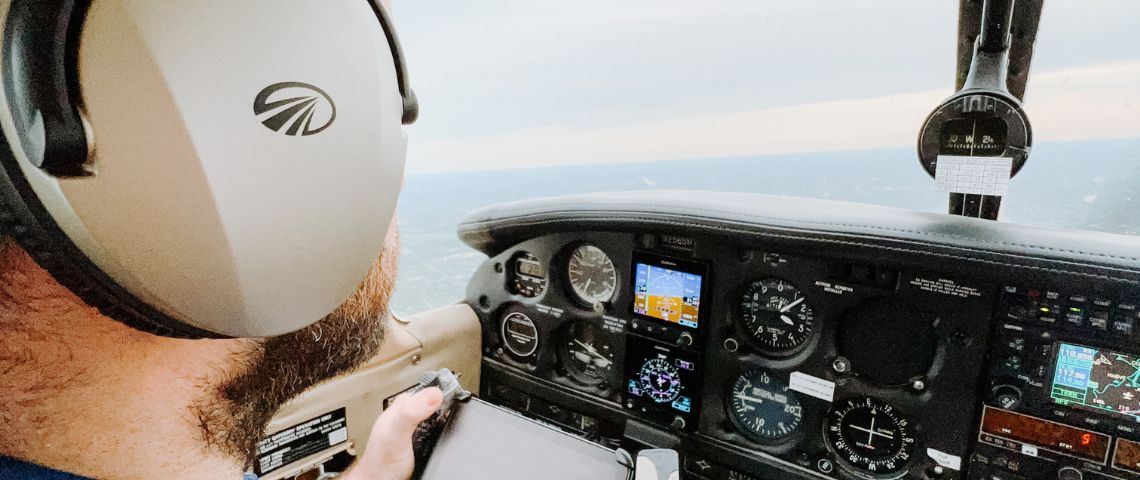
In a conventional analog panel, the six primary flight instruments are individual standalone units: the attitude indicator, airspeed indicator, altimeter, heading indicator, vertical speed indicator, and turn coordinator. Each instrument has its own power source or mechanical driver, operates independently of the others, and presents one piece of information to the pilot. Navigation is managed separately, typically via VOR receivers, an ADF, and enroute charts. Pilots learn to scan across all six instruments in a disciplined pattern, building a running mental model of what the aircraft is doing by synthesizing the readings from each.
In a glass cockpit, those six instruments are consolidated onto a single screen called the Primary Flight Display, or PFD. The attitude indicator occupies the center of the display in a format that is visually similar to its analog counterpart, but surrounding it are digital tape displays for airspeed and altitude, a digital heading indicator along the bottom, and a moving-map navigation overlay. A second screen — the Multi-Function Display, or MFD — provides weather data, terrain awareness, traffic overlays via ADS-B, and a full-color moving GPS map. Engine instrumentation is typically consolidated on the MFD as well, eliminating the separate row of analog engine gauges that older aircraft rely on.
In practical terms, the transition from an analog panel to a glass cockpit is less like upgrading a component and more like moving from a desktop with six separate monitors to a single integrated workstation. The information is largely the same; the presentation architecture, the scan pattern, and the cognitive relationship with the panel are all fundamentally different.
How the Garmin G1000 and Perspective+ fit into this
The Garmin G1000 has been the defining glass cockpit system in general aviation since its introduction in 2004, and it remains the standard against which most GA avionics are measured. Introduced on the Cessna 172 and subsequently adopted across virtually every major new single-engine and twin production aircraft, the G1000 established the PFD/MFD dual-screen architecture that most pilots now associate with the term glass cockpit in aviation.
The Garmin Perspective+ system, which equips the Cirrus SR20 and SR22, builds on the G1000 foundation with additional integration capabilities including autopilot coupling, electronic stability and protection (ESP), and the Cirrus Airframe Parachute System interface. By the mid-2010s, more than 98 percent of new general aviation aircraft were leaving the factory with electronic flight instruments rather than analog panels — a transition that was rapid enough that its full effects on pilot training are still being studied and debated.
What Analog Training Actually Develops
Any honest treatment of glass cockpit vs. analog cockpit training has to begin with what the analog panel does well — because the case for foundational analog training is not nostalgia. It is rooted in specific cognitive and perceptual skills that the analog format develops more directly than glass does.
Instrument scan habits
The discipline of scanning a six-pack panel is not incidental to instrument flying — it is the fundamental cognitive exercise of IFR flight. Each of the six instruments provides one dimension of information, and maintaining situational awareness of the aircraft’s state requires continuously cycling through all six, cross-checking for consistency, and updating a running mental model. There is no shortcut and no consolidation. The pilot either builds the scan or they don’t, and the penalty for a degraded scan in instrument conditions is severe.
Instructors with experience teaching on both platforms consistently report that students who learn on analog panels develop stronger scan habits more quickly than students who learn on glass. The reason is structural: the glass PFD consolidates so much information into a single, visually compelling display that students naturally anchor their attention to it rather than developing the wandering, disciplined cross-check that IFR flying demands. The analog panel forces the scan because there is no alternative way to stay oriented.
This matters practically for an important reason: even pilots who fly glass cockpit aircraft exclusively will encounter situations requiring the analog scan. All glass cockpit aircraft carry backup analog instruments — a standby attitude indicator, altimeter, and airspeed indicator — for exactly the failure mode where the electrical system or display hardware fails. A pilot whose scan was formed on glass, and who has limited experience building a mental picture from individual analog gauges, faces a genuine currency problem if they are ever required to fly on those backups in actual instrument conditions.
Raw feel for aircraft performance
There is a related argument that pilots who train on analog panels, without the assistance of moving maps, terrain alerting, and integrated automation, develop a more direct and visceral sense of what the aircraft is doing. When you navigate by timing, pilotage, and VOR cross-radials rather than by following a magenta line on a moving map, you build a mental model of position and situation that is constructed from raw data rather than read from a display. That model is more work to maintain, but it is also more robust — because it does not depend on any digital system staying operational.
This is not a trivial distinction. The automation-dependent pilot who has rarely navigated without GPS has not necessarily developed the mental infrastructure to do so. The pilot who learned to navigate without it, and later added the moving map as a supplement, has layered capability on top of a solid foundation. The direction of that sequence matters.
“I have a lot of respect for pilots who learned on steam gauges. The scan they built, the way they cross-check, the fact that they’ve actually navigated without a moving map telling them exactly where they are — those aren’t just old-school credentials. Those are skills. The question I ask is whether a pilot trained entirely on glass has built the same underlying foundation or whether they’ve been managing a very capable display without fully developing the judgment underneath it.”
— Harbour Dollinger, Founder, Kodiak Aviation | Falcon Field, Mesa, AZ
What Glass Cockpit Training Actually Develops
The case against glass cockpit training often focuses on automation dependency, and that risk is real. But it conflates the technology with undisciplined use of the technology — and ignores the genuine and substantial capabilities that well-structured glass cockpit training develops. Those capabilities are not available on an analog panel regardless of how disciplined the training is.
Integrated situational awareness
The most significant advantage of glass cockpit aviation in a training context is the quality of situational awareness it makes available to the pilot who has learned to use it properly. A PFD presenting attitude, airspeed, altitude, heading, navigation deviation, and vertical speed in a single integrated display does not just present the same information more compactly than the six-pack — it presents it in a way that enables the pilot to perceive relationships between data points rather than having to construct those relationships mentally from separate readings.
The addition of an MFD with a moving map, terrain awareness, and ADS-B traffic overlay extends this integrated awareness to the pilot’s entire flight environment. A pilot who has trained to interpret and use this information effectively — who has learned to monitor the traffic overlay during descent into busy airspace, to cross-check the terrain display against their own mental position estimate, and to manage the automation hierarchy without fixating on any single element — is operating with a quality of environmental awareness that a well-trained analog pilot in a comparably equipped aircraft simply cannot access.
Automation management as a flight skill
Managing automation is a genuine flight skill, and it is one that the professional aviation world demands. Regional airlines, corporate flight departments, and virtually every advanced piston operator in the country use glass cockpit avionics. A pilot who has spent their training hours building automation management fluency — who understands the hierarchy of automation modes, knows when to engage the autopilot to reduce workload and when to fly manually to stay sharp, and can intervene when automation behaves unexpectedly — has built a category of competency that analog training does not develop.
The FAA recognized this when it revised 14 CFR §61.129 in 2018 to allow commercial pilot certification training requirements to be met in technically advanced aircraft. The definition of TAA under that rule requires an IFR-certified GPS with a moving map display, a multi-function display, and a two-axis autopilot — the core components of a glass cockpit system. The regulatory rationale was explicit: time in TAA develops avionics management and automation fluency that is directly applicable to professional operations, and the prior requirement for time in complex aircraft (retractable gear, controllable-pitch propeller) was not keeping pace with the technology that pilots actually encounter in careers.
Research conducted at Middle Tennessee State University found that students using a TAA-based scenario training syllabus completed their instrument ratings with an average of 88.66 flight hours, compared to 134.3 hours for students using a traditional analog-based syllabus. The difference was attributed not to the glass displays themselves but to the integrated scenario-based training structure that modern avionics enable — training in which the broader flight environment and decision-making context are made visible in ways that the analog panel does not support as readily.
Reduced workload at high task loads
One of the structural advantages of the glass PFD in demanding phases of flight — an instrument approach in marginal conditions, managing a complex clearance in busy airspace, handling a system abnormality while maintaining aircraft control — is that the consolidation of information reduces the scanning workload precisely when that workload would otherwise be highest. The pilot flying a glass-equipped aircraft during a coupled ILS approach in IMC is managing a fundamentally different cognitive task than the pilot flying the same approach hand-flying on a six-pack: the integration of navigation deviation, airspeed, altitude, and attitude on a single display, combined with an autopilot capable of flying the approach to minimums, enables a level of precision and a margin for monitoring that the analog approach does not.
This is not an argument for flying on autopilot as a matter of habit. It is an argument that understanding how to use the automation available to you — including when to engage it, when to disengage it, and how to stay ahead of it — is a core pilot competency that glass cockpit training develops and analog training does not address.
A survey of general aviation pilots found that 74% preferred flying glass cockpit aircraft to analog. But the same survey found that 80% were concerned that over-reliance on glass displays could lead to unsafe flight operations. Both instincts are correct — and holding them simultaneously is exactly where good training needs to land.
Where the Glass vs. Analog Debate Actually Lives
The genuine risk of glass cockpit aviation is not that the displays themselves degrade pilot skill. It is that the richness and visual salience of glass displays can capture a pilot’s attention in ways that analog panels do not, reducing the time the eyes spend looking outside the aircraft and encouraging fixation on the screen at moments when situational awareness requires a broader scan. Research using eye-tracking data from pilots in simulator environments found that pilots flying glass cockpits allocated roughly 35 percent of their visual attention to the PFD alone — a significant attentional commitment that can come at the expense of outside visual scanning during visual flight and traffic avoidance.
The second real risk is automation mode confusion — a situation in which the pilot has engaged an autopilot or flight director mode without fully understanding what the automation is currently doing or what it will do next. Modern autopilot systems are highly capable, but their behavior is conditional on mode selections that are not always intuitive, and a pilot who has not built genuine automation literacy can find themselves monitoring an aircraft that is doing something different from what they believe they commanded. This is not a hypothetical risk; it is one that has contributed to accidents in both general aviation and commercial operations.
Both of these risks are training problems, not technology problems. A pilot who has been trained to deliberately manage their visual scan, to periodically disengage the automation to hand-fly and stay sharp, and to verify automation mode status explicitly rather than assuming it — rather than simply being handed a glass cockpit and told to learn — will not fall into either trap with any regularity. The technology does not create the dependency. Undisciplined use of the technology does.
The transition direction matters
One consistently reported observation among flight instructors is that the transition from analog to glass is considerably smoother than the transition from glass to analog. Pilots who learned on glass and later fly analog aircraft — as they invariably will when they rent older aircraft, fly cross-countries in unfamiliar equipment, or encounter a display failure requiring them to revert to standby instruments — often find the adaptation more disorienting than expected.
The reason is structural. An analog panel does not provide the cross-track deviation display that makes GPS navigation immediately intuitive, does not draw terrain contours on a map, and does not provide color-coded alerts when something departs from expected parameters. The pilot whose scan was formed in that richer environment is now working with less integrated information and must rebuild a mental picture from raw data. If their analog scan was never fully developed in training, this transition becomes genuinely difficult rather than merely unfamiliar.
This argues for a deliberate sequencing in glass cockpit training: not avoiding glass for some nostalgic reason, but ensuring that the foundational scan habits, the ability to navigate without GPS confirmation, and the ability to fly precise attitudes by reference to individual raw instruments are genuinely established before the pilot becomes fully dependent on the integrated display. For most pilots, this means regular exposure to partial panel flying — covering the PFD and maintaining control by reference to backup instruments — as a routine part of ongoing training rather than something visited only during instrument proficiency checks.
“The simulator is where we work on partial panel. Cover the PFD, fly the approach on backup instruments. It’s uncomfortable at first, especially for pilots who’ve done most of their training on glass. That discomfort is exactly the point. You want to discover your backup instrument limitations in a simulator at Falcon Field, not in the actual aircraft at 500 feet AGL in IMC. The Perspective+ system is excellent. You still need to be able to fly without it.”
— Harbour Dollinger, Founder, Kodiak Aviation | Falcon Field, Mesa, AZ
How to Train Smarter on a Glass Cockpit
Learn the system architecture before you fly it
The Garmin G1000, Perspective+, and comparable glass systems are sophisticated computers with layered menu structures, mode-dependent behavior, and integration logic that is not self-evident on first encounter. The pilots who adapt to glass cockpit avionics most quickly and safely are the ones who spent time with the pilot’s operating handbook, the avionics supplements, and — where available — a desktop simulator or the manufacturer’s PC training tool before their first flight in the aircraft. The cockpit is not an optimal environment for learning how the MFD’s terrain display is configured or how to enter a hold into the flight plan. Those things should be known before the engine starts.
This preparation pays dividends throughout training. A pilot who understands the automation modes of their autopilot — what “ALT” holds versus what “ALTV” does, why the flight director may command a pitch change at a waypoint, what happens when GPS signal is lost during an approach — is flying with genuine situational awareness of the automation. A pilot who has not done this groundwork is monitoring a system they do not fully understand and hoping it behaves as expected.
Build a glass scan, not just a glass stare
The most common glass cockpit training issue that experienced flight instructors describe is what some call “screen watching” — pilots whose eyes are anchored to the PFD or MFD for extended periods rather than executing a disciplined cross-check between the displays, the backup instruments, and the outside visual environment. In a visual traffic pattern, the moving map is not the primary means of situational awareness — it is a supplement to looking outside. In IMC, the MFD is not the primary reference for aircraft control — it is the PFD, and specifically the attitude and deviation information in the center of the display.
Building a genuine glass scan means developing the same discipline that analog training builds through necessity: a regular, deliberate cycle that hits the primary flight reference, the deviation instruments, the engine monitoring, and the outside scan in a cadence calibrated to the phase of flight. The glass cockpit does not impose this discipline automatically. It must be built through training as deliberately as it was built on analog panels by previous generations.
Fly partial panel regularly
Every pilot who primarily flies glass cockpit aircraft should be proficient at flying partial panel — at maintaining safe aircraft control and executing instrument approaches on backup instruments alone. Not because display failures are common, but because proficiency at partial panel requires the analog scan skills that glass training can under-develop, and maintaining that proficiency ensures that the foundational instrument flying capability stays current regardless of which aircraft or avionics system the pilot happens to be flying.
In a glass cockpit aircraft, partial panel practice means covering the PFD and flying by reference to the standby instruments: the standby attitude indicator, standby altimeter, and standby airspeed indicator. This is uncomfortable at first for pilots whose scan was formed on the integrated display, and that discomfort is useful. A simulator is an efficient environment for this work — it can be set up in any failure configuration repeatedly, without weather dependency, and the workload of the scenario can be calibrated to the pilot’s current proficiency level.
Use the automation deliberately, not reflexively
The autopilot in a modern glass cockpit aircraft is a precision tool that, when used correctly, reduces workload in demanding phases of flight and enables a quality of monitoring that hand-flying at high workload does not permit. When used reflexively — engaged at the beginning of every flight as a default rather than as a deliberate choice — it prevents the pilot from building and maintaining the hand-flying precision that is the foundation of all aircraft control.
The most effective approach is deliberate: hand-fly for the early and late phases of flight where precision matters most and building that precision is highest value, engage the automation in cruise and en route flight where workload management and monitoring benefit more from automation than the pilot benefits from hand-flying, and practice autopilot-off approaches and partial panel procedures regularly enough that the hand-flying skill stays current. The technology should be serving the pilot’s development, not substituting for it.
Use the simulator as a glass cockpit training tool
An FAA-certified flight simulator configured to match the avionics of the aircraft you fly is the most efficient environment available for glass cockpit systems training. Avionics flows, automation mode management, and partial panel procedures can be practiced to proficiency in a simulator without weather dependency, without the cost of an aircraft engine running, and without the risk of practicing failure scenarios in actual IMC. Students in research programs using simulator-based TAA training completed instrument currency requirements at meaningfully lower total hour counts than students relying on aircraft-only training, and the proficiency levels at certification were comparable.
For pilots who already hold ratings and are flying glass cockpit aircraft for currency rather than initial training, the simulator is particularly valuable for the emergency and abnormal procedures that cannot practically be practiced in the aircraft: vacuum system failures, primary display failures, electrical emergencies, and instrument approach procedures in actual low-visibility conditions that would require dispatching into IMC to simulate.
What the Modern Pilot’s Training Progression Should Look Like
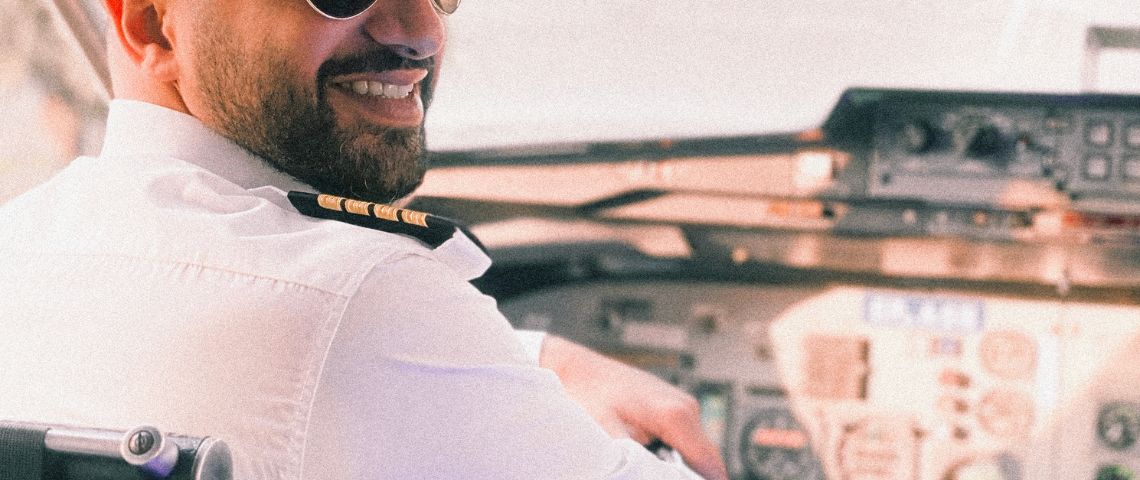
The practical implication of everything above is that the modern pilot’s training progression benefits from deliberate exposure to both architectures, sequenced in a way that builds genuine capability rather than accumulating hours in a single environment.
For student pilots in initial training, there is real value in at least some analog exposure early — not because glass cockpits are inferior, but because the scan habits and raw instrument interpretation skills that analog training forces are more easily developed before the glass display is available to bypass them. Many experienced instructors recommend early solo and VFR cross-country work in an analog aircraft, followed by the transition to glass for instrument training and the ratings work that follows. This sequence layers glass cockpit capability on top of an established analog foundation rather than trying to build the foundation later.
For pilots already flying glass who have not had substantial analog exposure, the prescription is not to go find an old Cessna 150 and fly it for fifty hours. It is to build partial panel proficiency into regular training, to occasionally hand-fly approaches that are normally flown coupled, and to remain honest about whether the scan and situational awareness that would be available after a total display failure are current and reliable.
For pilots working toward professional careers, the industry expectation is fluency with glass cockpit avionics because every regional airline, every corporate flight department, and essentially every advanced piston operation in the current market uses glass-panel aircraft. A pilot who arrives at an initial type rating course with genuine Garmin G1000 or Perspective+ proficiency is not starting from scratch on avionics management; they are building on a foundation that directly transfers. That transition advantage compounds throughout a career.
The best-prepared pilot is not the one who has logged the most hours on any single panel type. It’s the one who can walk into an unfamiliar cockpit, identify what’s in front of them, and fly the airplane safely while they figure out the rest.
Glass cockpit aviation did not replace the need for stick-and-rudder skill, instrument scan discipline, or genuine airmanship. It added an entirely new layer of capability — situational awareness, automation management, integrated navigation — that now defines what competent instrument flying looks like in the professional world. The pilots who develop both will fly better, transition more smoothly, and arrive at each new aircraft or avionics system with a broader foundation to build on than those who have mastered only one.
Train on the Aircraft the Industry Flies.
Kodiak Aviation operates a 2021 Cirrus SR20 G6 (N701YZ) equipped with Garmin Perspective+ avionics at Falcon Field (KFFZ) in Mesa, AZ. Available at $285/hour wet, it is one of the most capable single-engine training and rental platforms in general aviation — the same avionics architecture pilots encounter in commercial and professional operations.
Our FAA-certified Cirrus Flight Simulator is available at $100/hour for instrument currency, partial panel work, and emergency procedure training — fully loggable, weather-independent, and identical in avionics configuration to the aircraft.
📍 Falcon Field (KFFZ), Mesa, AZ | 📞 (480) 568-3795 | ✉️ info@localhost
Book at kodiakaviationco.com
Sources and references: FAA 14 CFR §61.129(j) (TAA definition and commercial pilot training requirements, 2018 revision); AOPA, “Glass Class: Meet Your TAA”; AOPA, “Complex or Advanced?”; PilotMall.com, “Technically Advanced Aircraft: Transforming Pilot Training Today”; MTSU/Craig et al. (2005), FITS syllabus instrument rating completion hours research; Casner (2008), general aviation pilot attitudes toward TAA; ResearchGate, “Introduction of TAA in Ab-Initio Flight Training” (Rigner & Dekker); ScienceDirect, “Can a Glass Cockpit Display Help (or Hinder) Performance of Novices in Simulated Flight Training?” (2014); Air Facts Journal, “Glass Cockpits: Don’t Make It Harder Than It Really Is”; Vertical Vision Flight Academy, “Glass Cockpit vs. Six-Pack”; Pilot Institute, “Round Dials or Glass Cockpits: Which Is Better?”; FAA/Industry Training Standards (FITS) program documentation; AOPA Air Safety Foundation, fleet composition data (2007).
Aircraft Rental at Falcon Field: Everything You Need to Know About KFFZ
READ STORY