From Student to Professional: How Access to the Right Aircraft Shapes Better Pilots
March 11, 2026
Every pilot remembers the aircraft they learned in. Not just the make and model — the specific feel of it. The way the trim ran. The lag on the radios. The instrument scan they developed without quite realizing they were developing it. The habits that formed in those early hours, repeated dozens of times until they stopped feeling like habits and started feeling like flying.
The problem is that habits formed in a specific cockpit environment don’t always travel cleanly. Pilots who train in one type of aircraft and then transition to another don’t just learn new procedures — they often have to actively unlearn old ones. Scan patterns built around analog gauges don’t map well to integrated glass displays. Workflows built around managing fragmented information sources don’t prepare pilots for the consolidated situational awareness tools that define modern aviation. The cockpit a student learns in isn’t neutral. It shapes the pilot they become.
This is the piece of flight training that rarely gets discussed directly. Most conversations about training quality focus on instructor experience, syllabus structure, or flight hours. Those things matter — genuinely. But the aircraft is the environment where all that instruction gets practiced, internalized, and ultimately automated. The quality of that environment, and whether it reflects the direction aviation is actually moving, has more influence on long-term pilot development than most students account for when they’re choosing where to start.
What “Good Habits” Actually Means in a Cockpit
In aviation, habit is not a casual concept. Flight training exists, at its core, to build habits so deeply ingrained that they execute reliably under pressure — in the moments when a pilot is task-saturated, fatigued, or managing something unexpected.
The habits that matter most in professional aviation fall into three categories: scan discipline, workload management, and decision-making under time pressure. Each of these is shaped directly by the environment where initial training occurs.
Scan discipline
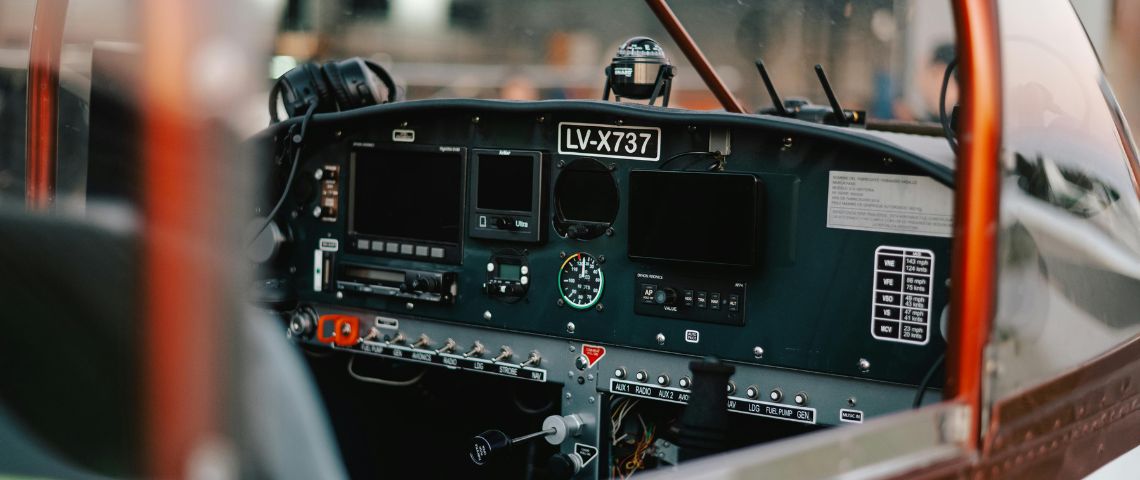
Every pilot develops an instrument scan — a sequence for moving attention across the cockpit to stay current on aircraft state. In a traditional analog cockpit, this scan involves reading six or more separate instruments and mentally assembling them into a coherent picture of airspeed, altitude, attitude, heading, and vertical speed. It’s a skill that takes time to develop and, done well, works. But it requires continuous active effort to maintain, and it is highly specific to analog formats.
In a glass cockpit, the Primary Flight Display consolidates all of that information into a single integrated layout. The scan is different — not simpler, exactly, but more holistic. The pilot’s attention is drawn to anomalies rather than to the mechanical task of reading individual gauges. Research on glass cockpit training consistently shows that students who learn on integrated displays develop situational awareness more quickly in early training, and they carry that advantage forward into instrument work, cross-country planning, and ultimately into the high-workload environments of commercial operations.
The scan a pilot develops in their first hundred hours becomes the foundation of their scan for the rest of their career. Training in an environment that matches where aviation is going isn’t a luxury choice. It’s a developmental one.
Workload management
A significant portion of flight training is implicitly about learning what to pay attention to and when. Early students pay attention to everything because they can’t yet distinguish what matters right now from what can wait. As proficiency develops, priority management becomes more automatic. The pilot scans, identifies what needs action, addresses it, and moves on.
Modern training aircraft with integrated avionics accelerate this development in a specific way: they consolidate information into fewer places, reducing the mechanical overhead of data gathering and freeing cognitive bandwidth for the higher-order task of interpretation. When a student in a glass cockpit can see weather, traffic, terrain, and navigation data on a single display while simultaneously monitoring engine parameters and managing ATC communications, they are developing a workload model that directly mirrors professional operations. Students trained primarily on legacy systems often have to rebuild this capacity from scratch when they reach more advanced aircraft.
Decision-making under pressure
The third habit category is arguably the most critical and the hardest to teach directly: the ability to make sound, timely decisions when conditions are changing faster than the pilot can process them comfortably. Good decision-making in the cockpit is built on top of good situational awareness, which is built on top of reliable, easily interpreted information. Training in an aircraft that provides better information in a more accessible format creates a better foundation for the decision-making habits that eventually determine whether a pilot is safe and capable or merely licensed.
Habits formed in the first hundred hours of flight training don’t just teach pilots how to fly a specific aircraft. They teach pilots how to process a cockpit — how to scan, prioritize, and decide. Those patterns become automatic. The aircraft that shapes them shapes the pilot.
The Gap Between Where Pilots Train and Where Aviation Is Going
Walk through the majority of general aviation flight schools in the United States and you’ll still find a significant portion of their fleets made up of aircraft from the 1970s and 1980s. These are not bad aircraft. The Cessna 172 Skyhawk is one of the most proven training platforms in history. The Piper Cherokee has introduced more pilots to flight than most people realize. They fly well, they’re mechanically understood, and they’re available in volume at affordable hourly rates.
But there is a gap between what these aircraft teach and what modern aviation — regional carriers, corporate operators, advanced general aviation — actually expects of the pilots who enter it.
The analog-to-glass transition problem
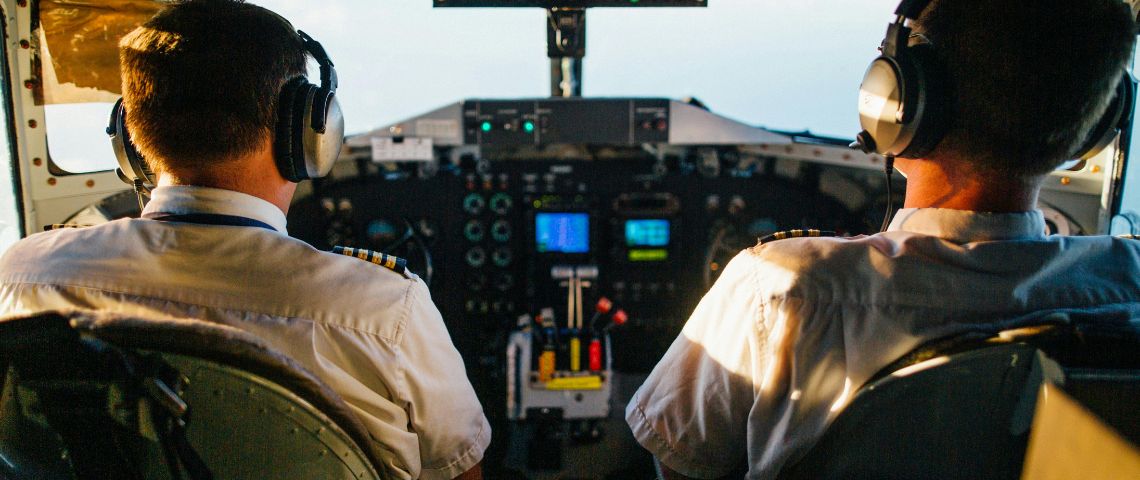
Airlines and corporate operators have moved decisively to glass cockpits. The Airbus A320 family, the Boeing 737 MAX, the Embraer E-Series, virtually every modern commercial airframe integrates primary flight displays, multifunction displays, and flight management systems that bear far more resemblance to a Garmin G1000 or Cirrus Perspective+ than to any six-pack analog panel. A first officer hired at a regional carrier today is stepping into a cockpit environment that has more in common with a modern training aircraft than with the steam gauges where many pilots spent their formative hours.
Pilots who complete their private and instrument training in glass-equipped aircraft are not intimidated by this environment. They already think in terms of integrated data. They already understand automation logic, traffic overlays, synthetic vision, and the kind of system-monitoring discipline that modern commercial operations require. Pilots who trained on legacy systems are capable of making the transition — but they are making it for the first time when the professional stakes are already high.
The FAA has already recognized this
The FAA formally classifies aircraft equipped with at least an electronic primary flight display, an electronic multifunction display, and an engine monitoring display as Technically Advanced Aircraft, or TAA. This designation carries regulatory weight: pilots who complete their commercial certificate training in a TAA may qualify with 190 total flight hours rather than the 250 hours required in conventional aircraft under Part 61 programs.
This is not a loophole. It is the FAA’s acknowledgment that training in a more integrated avionics environment produces pilots who reach specific proficiency benchmarks faster — particularly in situational awareness, cross-country decision-making, and systems management. The same logic applies to instrument rating training, where TAA aircraft similarly reduce certain minimum hour requirements, recognizing the accelerated learning curve that modern avionics provide.
“Every airline that interviews a pilot wants to know how they manage a glass cockpit under pressure. That’s not a type rating question — it’s a fundamentals question. The pilots who learned in glass-equipped aircraft during their training can answer it. The ones who didn’t have to prove it from scratch. One of those pilots is ready. The other is catching up.”
— Harbour Dollinger, Founder, Kodiak Aviation | Falcon Field, Mesa, AZ
What Modern Training Aircraft Actually Provide
The argument for training in a modern, well-equipped aircraft is not about brand preference or status. It is about the specific, concrete capabilities that modern training platforms provide and how those capabilities shape the developmental arc of a student pilot.
Integrated situational awareness from lesson one
In a glass-cockpit training aircraft, a student’s very first lesson includes exposure to a moving map, terrain awareness, traffic information, and an integrated engine monitoring display — the same categories of information they will use to make real flight decisions for the rest of their aviation life. They are not learning a simplified version of situational awareness and then upgrading later. They are learning actual situational awareness from the beginning, in an environment that is as close to modern operational reality as general aviation training aircraft can deliver.
This matters because situational awareness is not a module in a ground school curriculum. It is a habit of perception that has to be developed through repeated, real exposure. Students who spend their formative hours flying with a moving map, NEXRAD weather overlays, and terrain warnings develop the instinct to consult and interpret that information automatically. Students who learn on systems that don’t provide that integration have to develop the habit later, in more demanding environments, at higher stakes.
Automation management as a first-class skill
One of the most important skills in modern aviation is the ability to manage automation intelligently — to know when to engage it, when to disengage it, and how to monitor it continuously so that an automated system’s failure never catches the pilot unaware. This is not a skill that can be developed in an aircraft that has no automation. It can only be learned by flying with autopilot systems, flight directors, and integrated nav modes and developing the discipline to monitor them actively rather than delegate to them passively.
Modern training aircraft introduce automation management early, in a lower-stakes environment, where instructors can shape the right habits around it. Students learn that the autopilot is a tool, not a replacement for pilot awareness. They develop the monitoring scan, the mode awareness, the discipline to understand what the aircraft is doing and why before trusting it to continue. These are habits that professional aviation demands, and they are far more efficiently built in training aircraft that provide them than retrofitted after the fact.
Safety architecture that matches modern standards
Contemporary training aircraft designed around modern safety standards incorporate features that simply did not exist in aircraft built half a century ago. Enhanced Stability and Protection systems — known in Cirrus aircraft as ESP — provide passive intervention when aircraft attitude reaches the edge of safe parameters, giving a student pilot an additional margin while they are still developing the reflexes to respond to unusual attitudes independently. Airframe Parachute Systems like CAPS, standard on all Cirrus aircraft, provide a last-resort recovery option that has saved lives in situations where conventional recovery was not possible.
These are not crutches. They are tools that reduce the severity of the learning environment’s most catastrophic failure modes, which allows students and instructors to pursue more challenging training scenarios with a larger safety margin. A student who can practice unusual attitude recovery with an ESP backstop learns more from each attempt than one who has to remain further from the edge to preserve recovery margins in an aircraft without it.
The FAA’s Technically Advanced Aircraft designation is a formal acknowledgment of what experienced instructors have understood for years: students trained in modern avionics environments reach proficiency benchmarks faster and arrive at professional operations better prepared than those trained on legacy systems.
The Argument for Consistency Across the Training Arc
One detail that pilot skill development research returns to consistently is the value of aircraft consistency across the full training arc. A student who completes their private certificate in one aircraft, their instrument rating in a different aircraft, and their commercial cross-country hours in a third aircraft is not accumulating integrated experience. They are accumulating hours in three different cockpit environments, each with its own avionics logic, its own instrument scan requirements, and its own automation behavior.
Every aircraft transition carries a cost. It’s not a large cost per transition, but it accumulates. Each time a pilot shifts to an unfamiliar cockpit, some of their cognitive bandwidth goes to reorienting rather than flying. In training environments — where the goal is to develop deep, automated competence — that reorientation overhead competes directly with skill consolidation.
The pilots who develop the most quickly in training are almost always the ones who fly the same aircraft, with the same avionics, in the same cockpit environment, lesson after lesson. The consistency allows the system-level tasks to automate fully, freeing the pilot’s attention for the higher-order work: weather judgment, airspace management, decision-making, communication. That’s the work that builds professionals. The cockpit mechanics are just the floor they work on.
Simulator continuity extends the principle
The same consistency argument applies to simulator training. A flight simulator that replicates the specific avionics suite of the aircraft a student flies is not just a procedural trainer. It is an extension of the same cognitive environment, allowing students to practice instrument approaches, holds, system failures, and emergency procedures in a context that directly reinforces what they’ve built in the aircraft. The scan they practice in the simulator is the same scan they execute in the aircraft. The flows they build in the simulator are the flows they run in the air.
A simulator that replicates a different avionics suite is useful. A simulator that matches the aircraft a student is actively training in is significantly more so. The transfer of learning is more direct, the procedural habit is more deeply reinforced, and the time spent in the simulator is more efficiently converted into operational proficiency.
What the Transition to Professional Aviation Actually Demands
For pilots on a career track, understanding what professional aviation will ask of them — and whether their training is genuinely preparing them for it — is not an abstract concern. It is the most practical question they can bring to every flight training decision they make.
Regional carriers hiring first officers are not primarily evaluating technical knowledge. That’s assessed on the written exams and during the type rating. What they are evaluating in interviews and in initial new hire training is something harder to acquire and easier to carry from a well-chosen training environment: how a pilot manages the cockpit.
Do they develop a plan before they execute it? Do they brief what’s likely to happen and what they’ll do if it doesn’t? Do they monitor automation actively or trust it passively? Do they verbalize deviations before they escalate, or do they quietly work around them? Do they scan with discipline, or does their attention collapse onto whatever is most urgent at that moment?
These are not airline-specific behaviors. They are the behaviors that high-quality flight training builds from the beginning, in pilots who train in modern aircraft that demand and reward them. The pilot who has managed Perspective+ avionics, monitored ESP interventions, briefed approaches on a real glass panel, and debriefed flights with a CFI in a cockpit that mirrors professional operations is not starting from scratch at new hire ground school. They are building on a foundation that already speaks the language.
“The conversation about what makes a good pilot always comes back to habits. Not hours in the logbook — habits. What does this pilot do automatically when the workload goes up? What do they reach for first when something unexpected happens? Those patterns were formed somewhere, usually in the first couple hundred hours. The aircraft they trained in has everything to do with what those patterns look like.”
— Harbour Dollinger, Founder, Kodiak Aviation | Falcon Field, Mesa, AZ
The Honest Tradeoff: Modern Aircraft Aren’t the Easiest Starting Point
There is a real counter-argument to training primarily in modern, glass-cockpit aircraft, and it deserves an honest hearing rather than a dismissal.
Flying a sophisticated aircraft — one with integrated avionics, autopilot, moving maps, and advanced safety systems — in the early stages of training can direct a student’s attention toward system management at the expense of raw stick-and-rudder skill. A student who learns to manage an autopilot before they can fly a clean crosswind landing manually is building on a foundation that has a visible gap. A pilot who relies on synthetic vision to maintain terrain awareness has not developed the instinct to manage terrain through position awareness and chart work.
This is real. And experienced instructors who train students in modern aircraft are aware of it. The right response is not to train on legacy systems to avoid the risk, but to structure training in modern aircraft so that the foundational skills come first, the technology comes second, and the two are explicitly connected. Stick and rudder. Energy management. Situational awareness without the moving map before learning to use the moving map as a confirmation tool rather than a primary reference.
Modern aircraft in the hands of instructors who teach them properly produce better-prepared pilots. Modern aircraft in the hands of instructors who let the avionics substitute for the fundamentals produce pilots with hidden gaps. The aircraft is the tool. The instructor shapes how it’s used. Both have to be right.
Pilot Skill Development as a Long-Term Investment
There is a version of the flight training decision that focuses almost entirely on the immediate: which school has the lowest hourly rate, which aircraft has the shortest scheduling queue, which certificate can be completed fastest.
And there is a version that starts from a different question: what kind of pilot do I want to be in five years, and what is the training environment that builds toward that?
The pilots who think about it the second way — who choose training environments that match where aviation is going rather than where it’s been — tend to arrive at professional operations with a different quality of readiness. Not just more hours, but better habits. Not just completed certificates, but a cockpit management style that reflects genuine situational awareness and decision-making discipline.
That readiness isn’t built in a single lesson. It is accumulated, hour by hour, in an environment where the right habits are demanded, reinforced, and gradually automated. The aircraft a student trains in is that environment. Choosing it thoughtfully is one of the highest-leverage decisions in an aviation career.
Professional aviation evaluates pilots on what they do automatically under pressure — not what they know in a classroom. The habits that perform under pressure were built somewhere. The earlier and more consistently they were built in the right environment, the more reliably they perform when it counts.
The Aircraft Is the Training Environment — Choose It Accordingly
Flight training is ultimately a process of building a pilot out of a student. The instructor provides structure, feedback, and expertise. The syllabus provides sequence and standards. The aircraft provides the environment where every lesson is practiced, every habit is formed, and every reflex is ingrained.
An aircraft that represents the technology and demands of modern aviation shapes a pilot who is ready for modern aviation. An aircraft that represents the past shapes a pilot who will spend part of their early career catching up. Neither path is impossible — aviation has produced excellent pilots through both. But one path builds a foundation under the pilot from the beginning. The other asks them to build it later, on a moving target, while the professional demands are already in motion.
The choice of where to train, and what to train in, is not a minor administrative decision. It is the first and most consequential act of pilot skill development. It deserves the same level of deliberate consideration as any other major investment in an aviation career — because in a real sense, it is exactly that.
Train in a Modern Aircraft. Build Habits That Transfer.
Kodiak Aviation offers flight training access in our 2021 Cirrus SR20 G6 (N701YZ) — a Technically Advanced Aircraft equipped with Cirrus Perspective+ by Garmin, CAPS, and ESP, based at Falcon Field (KFFZ) in Mesa, AZ. Rental runs $285/hour wet. Our FAA-certified Cirrus Flight Simulator is also available at $100/hour for fully loggable instrument time, any day, regardless of weather.
Modern avionics. Consistent aircraft. A glass cockpit environment that mirrors what you’ll fly professionally — from your first lesson through your last currency requirement.
📍 Falcon Field (KFFZ), Mesa, AZ | 📞 (480) 568-3795 | ✉️ info@kodiakaviationco.com
Book your session at kodiakaviationco.com
Kodiak Aviation is based at Falcon Field (KFFZ) in Mesa, AZ. Aircraft rental available in our 2021 Cirrus SR20 G6 (N701YZ) at $285/hr wet — a Technically Advanced Aircraft (TAA) equipped with Cirrus Perspective+ by Garmin, CAPS, and ESP. FAA-certified Cirrus Flight Simulator available at $100/hr for loggable instrument time. On-site study lounge and complimentary refreshments. Assistance hours: Monday–Friday 6am–8pm.
Aircraft Rental at Falcon Field: Everything You Need to Know About KFFZ
READ STORY