How Modern Rental Fleets Reduce Cognitive Load for Pilots in Training
March 12, 2026
Every pilot has had the experience of a flight where the aircraft was not the problem — and a flight where it was.
In the first kind, the instrument scan flows without effort, radio calls come out cleanly, the approach is briefed well ahead of time, and the landing feels like a natural conclusion to a well-managed flight. In the second kind, something about the aircraft is using up working memory that was supposed to be available for everything else. A knob in a slightly different place. An avionics page that needs two extra steps to reach. A minor system anomaly that might be nothing but cannot quite be dismissed. The physical act of flying is no harder, but the cognitive experience of that flight is different in a way that affects how well everything else is executed.
This distinction — between cognitive resources consumed by the aircraft itself and cognitive resources available for flying the flight — is at the heart of what makes some training environments more effective than others. It is also the reason that fleet consistency and aircraft quality are not incidental factors in pilot training. They are training variables, and they matter in ways that are well-supported by both cognitive science and aviation research.
This piece explains what cognitive load is in the context of flight, how it is shaped by the aircraft a pilot is trained in, and why a modern, well-maintained, consistent rental platform reduces the cognitive overhead that gets between a student pilot and what they are actually trying to learn.
The aircraft a pilot trains in is not just a machine. It is a cognitive environment. What that environment demands from working memory shapes what is left over for learning, situational awareness, and sound decision-making.
What Is Cognitive Load, and Why Does It Matter in a Cockpit?
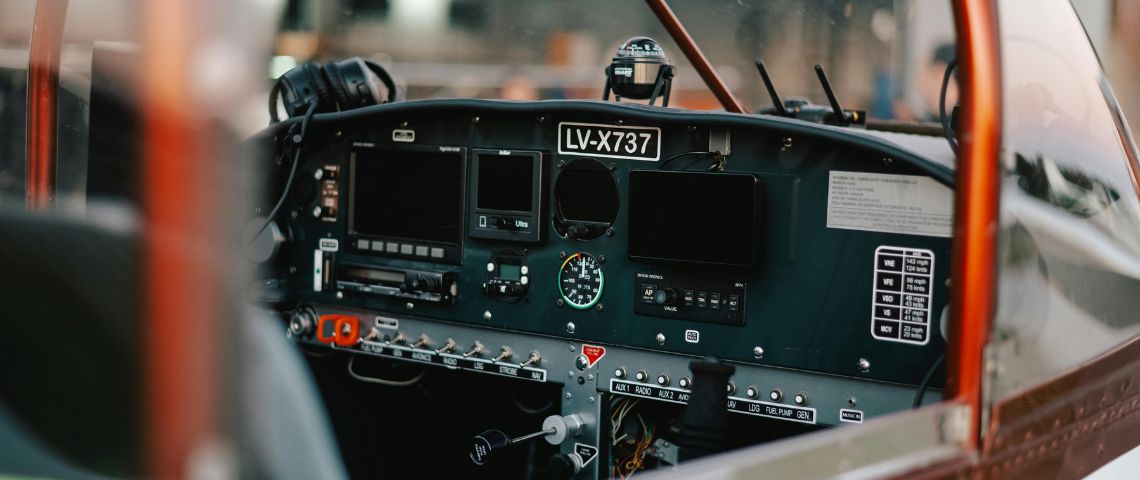
Cognitive load refers to the total mental effort being used in working memory at any given moment. The concept originates in educational psychology and has been extensively applied in aviation research, where the demands on a pilot’s working memory are both well-defined and consequential.
Working memory — the short-term, active processing system that holds information while it is being used — has a limited capacity. This is not a personal failing; it is a feature of human cognition. When the total demands on working memory approach or exceed that capacity, performance degrades. Decision quality drops. Details are missed. Responses slow. In a learning context, overloaded working memory cannot encode new information into long-term memory, which means the student is present for the lesson but not actually building the skills it was designed to develop.
In aviation, this matters at every stage of training. A student pilot managing a first solo cross-country is simultaneously navigating, communicating with ATC, monitoring the weather, tracking fuel, managing the engine, and attempting to execute the flight plan they prepared. The intrinsic cognitive load of that task — the load that belongs to the complexity of the flight itself — is already substantial. Any additional load imposed by the aircraft — unfamiliar avionics, a layout the student has to consciously translate, a system behavior that is not yet automatic — reduces what is available for the actual flight.
The three types of cognitive load in flight training
Cognitive Load Theory, developed by John Sweller and widely applied in aviation training research, distinguishes between three types of load that contribute to total working memory demand. Understanding these types helps explain exactly where aircraft consistency and quality intervene in the training process.
Intrinsic load is the load inherent to the task itself. Flying an ILS approach to minimums in actual IMC, with a crosswind and a non-standard missed approach procedure, has high intrinsic load. This cannot be reduced by simplifying the aircraft — it is a property of the task’s complexity. What good training design does is sequence tasks so that intrinsic load is introduced gradually, allowing the student to build capability before complexity is added.
Extraneous load is load imposed by factors that are not essential to the task. A poorly labeled instrument, an avionics workflow that requires multiple non-intuitive steps, a cockpit layout the student must consciously translate rather than automatically read — all of these add extraneous load. This is the type of cognitive overhead that is most directly controlled by aircraft design and fleet consistency. It does not serve learning. It competes with it. Aviation training researchers note that a poorly designed cockpit requiring unnecessary steps to access vital information is a direct example of extraneous load in practice.
Germane load is the productive load associated with building schemas — the organized knowledge structures that allow a skilled pilot to process complex situations efficiently rather than constructing responses from scratch. Germane load is what learning feels like when it is working. The goal of training design is to reduce extraneous load and manage intrinsic load, precisely so that more cognitive capacity is available for germane load — for building the expertise that eventually makes complex flying feel manageable.
“When I watch a student working too hard to manage the aircraft, I know the lesson isn’t landing. They’re spending everything they have just keeping up with the cockpit. The flying is happening, but the learning isn’t. That’s a fixable problem, and a big part of the fix is giving students an aircraft that’s consistent, reliable, and that they know well enough that the cockpit stops being the problem.”
— Harbour Dollinger, Founder, Kodiak Aviation | Falcon Field, Mesa, AZ
The Cognitive Cost of Flying an Unfamiliar or Inconsistent Aircraft

The clearest evidence that aircraft familiarity matters cognitively is the experience of flying an unfamiliar aircraft for the first time. Even for experienced pilots transitioning to a new type, the first several flights are heavier than they should be. Not because the new aircraft is harder to fly — most training aircraft are deliberately docile — but because nothing is automatic yet. Every scan requires a slight translation. Every system interaction is a conscious act rather than a practiced reflex.
For student pilots, this effect is compounded by the fact that nothing is fully automatic yet anyway. The student is still building automaticity for basic aircraft control, navigation fundamentals, radio procedures, and traffic scanning simultaneously. Any additional cognitive overhead imposed by aircraft inconsistency hits a working memory that is already heavily allocated.
What ‘inconsistency’ actually costs in training
In a rental fleet where a student flies different aircraft on different days — a Cessna 172 with a standard layout one week, a different 172 with an upgraded GPS but different panel configuration the next, a third aircraft with a different avionics suite the week after — a portion of every flight’s cognitive budget is spent on reorientation. Where is the fuel selector on this one? Does the GPS on this aircraft use the same button sequence? Is the trim wheel in the same position relative to where the student trained last time?
These are small questions, but they are not free. They use the same working memory capacity that should be available for traffic awareness, weather assessment, procedure execution, and learning the lesson the instructor planned. Research in aviation training consistently finds that extraneous cognitive load — including the load imposed by unfamiliar or inconsistent equipment — actively impairs the encoding of new skills and information into long-term memory. The student can complete the flight. They may even pass the lesson’s evaluation criteria. But the cognitive overhead of aircraft inconsistency means they are building schemas more slowly than they would in a consistent environment.
The maintenance factor
A poorly maintained aircraft adds a different category of cognitive overhead: background vigilance. A pilot who is aware of a known issue — an avionics anomaly, an instrument reading that is “usually fine,” an engine that runs slightly rough at a particular power setting — cannot fully suppress that awareness during flight. Some fraction of working memory is allocated to monitoring the known issue, ready to escalate if the issue changes. This is not paranoia; it is reasonable situational awareness. But it taxes the same cognitive resource that everything else in the flight is competing for.
For student pilots, who have less experience to draw on when evaluating whether a system behavior is normal or abnormal, this effect is more pronounced. An experienced pilot with 2,000 hours in type has a precise mental model of what the aircraft is supposed to sound and feel like. A student pilot does not yet have that model. Without it, the threshold for when a perception becomes a concern worth monitoring is less clear, and the cognitive cost of background monitoring is correspondingly higher.
An aircraft whose maintenance record is current, whose known squawks have been resolved before the next flight, and whose systems behave predictably and consistently removes this category of overhead entirely. The student pilot in that aircraft can allocate their full working memory to the flight, because the aircraft is not asking for any of it.
What Makes a ‘Cognitive Pilot’: Situational Awareness, Decision-Making, and Mental Bandwidth
Aviation safety researchers have long identified situational awareness — the pilot’s accurate, current mental model of the flight’s state and trajectory — as one of the most critical cognitive skills in the cockpit. Mica Endsley’s foundational framework describes situational awareness in three levels: perception of elements in the environment, comprehension of their meaning, and projection of their future state. Each level builds on the previous one, and each requires cognitive resources to maintain.
The pilot who is using working memory to manage an unfamiliar aircraft is less available for all three levels of situational awareness. Their perception is still functioning, but the rate at which perceived information is processed and integrated into a coherent picture of the flight is reduced. Their comprehension of what the perceived information means is slower. Their projection of where the flight is heading — the forward-looking judgment that separates reactive flying from proactive flying — suffers most of all, because it is the most cognitively demanding of the three levels and the first to degrade under working memory load.
Decision-making follows the same pattern. The quality of a pilot’s decisions under pressure is closely linked to their available cognitive capacity. Research using NASA’s Task Load Index (TLX) — the most widely used subjective measure of pilot workload — consistently shows that higher-workload phases of flight correlate with reduced decision quality and higher error rates. When the aircraft itself is a source of cognitive load, those effects are present even during phases that would otherwise be manageable.
Automaticity: the goal of all flight training
The long-term objective of flight training is not that a pilot can perform required tasks. It is that a pilot can perform required tasks automatically, freeing working memory for the unexpected. Automaticity — the ability to execute a procedure without conscious effort — is built through consistent, repeated practice on the same system in the same environment. It is not built across varying environments at anything like the same rate.
A student pilot who has completed fifty approaches in the same aircraft has built a precise, deeply encoded schema for how that aircraft behaves on approach: the pitch attitude at various flap settings, the power reduction that stabilizes the glide path, the visual picture that corresponds to being on speed over the threshold. That schema is automatic in the sense that it does not require working memory to access. The pilot can execute the approach while simultaneously monitoring traffic, managing the radio, and briefing the missed approach — because the approach itself is no longer consuming the cognitive resources it once did.
That same pilot, placed in a different aircraft type without adequate transition training, is back to conscious execution. The schema does not transfer. The approach that was automatic is effortful again. The cognitive overhead returns, and with it, the reduced availability for everything else that is happening during a busy approach phase.
Automaticity is not a gift. It is an outcome of consistent, repeated practice in a stable environment. Every unnecessary change in aircraft or avionics resets part of that process and makes the pilot work harder to reach the same place.
What Modern, Integrated Avionics Actually Do for Pilot Cognitive Load
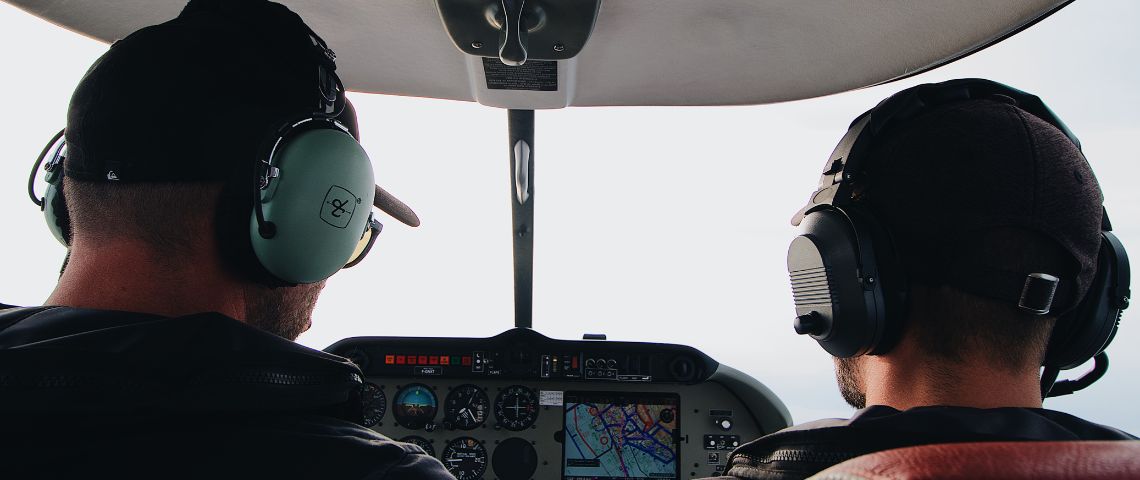
There is a common concern in general aviation training that glass cockpit aircraft increase cognitive load for student pilots by presenting more information than analog instruments. This concern is not without basis — any new system adds extraneous load during the unfamiliarity phase. But it mistakes the transition cost for the steady-state cost, and the research on trained pilots in modern glass cockpit environments tells a different story.
Well-designed integrated avionics suites — like the Garmin Perspective+ in the Cirrus SR20 G6 — consolidate information that analog instruments scatter across a panel into an organized, spatially consistent primary flight display. The pilot’s primary instrument scan, which in an analog cockpit involves integrating readings from six or more separate instruments into a coherent picture of the aircraft’s state, is supported by a display architecture that does much of that integration automatically. Attitude, airspeed, altitude, vertical speed, heading, and engine indications are arranged in a single, logically organized visual field rather than distributed across a panel the pilot must visually parse.
Integrated displays and scan efficiency
Eye-tracking research in glass cockpit environments has found that trained pilots flying PFD-equipped aircraft develop highly efficient scan patterns that concentrate a majority of eye fixation time on the primary flight display, with rapid, structured excursions to the MFD and outside the cockpit. This centralized scan is more efficient than the distributed scan required by analog instrumentation, which requires continuous cross-checking between physically separated instruments that must be individually read and then mentally integrated.
For student pilots, the efficiency advantage of a well-designed PFD is available once the avionics system itself is no longer novel — once the extraneous load of learning the interface has been worked through and the display becomes transparent. This is why simulator access before first flight in a glass-cockpit aircraft is such a practical tool: it allows students to absorb the avionics interface in a low-stakes environment, converting the cognitive overhead of a new system into a resource that supports rather than competes with learning during actual flight training.
Automation as a workload management tool
Modern training aircraft also offer automation capabilities — autopilot, altitude preselect, coupled approaches — that, used intelligently, allow a student pilot to reduce the motor and scanning demands of maintaining altitude and heading while their cognitive resources are directed toward higher-order tasks: procedure briefing, traffic awareness, weather evaluation, decision-making practice.
This is not learning to be a passive systems monitor. It is learning to manage workload strategically. The professional airline environment that many student pilots are training toward is an automation-rich environment, and developing the judgment to use automation as a cognitive tool rather than a crutch is itself a trainable skill. Modern training aircraft provide that training environment. Older, less-equipped aircraft cannot.
The point is not that automation reduces the need for manual flying skill — manual proficiency remains essential and should be practiced deliberately. The point is that available automation, used with discipline, allows a student to choose where cognitive resources are directed in a given phase of flight, rather than having all resources consumed by the basic task of keeping the aircraft precisely controlled.
What Fleet Consistency Produces Over the Course of a Training Program
The cumulative effect of training consistently in a single, well-maintained, modern aircraft compounds over the course of a training program in ways that are difficult to see in any individual flight but become clear when comparing outcomes across training environments.
Faster schema development
Schema — the organized knowledge structures that allow experts to process complex situations as recognizable patterns rather than novel problems — develop faster in consistent environments. A student pilot who trains in the same aircraft from their first dual to their checkride has, by the end of that training, built schemas specific to that aircraft’s behavior. The aircraft’s handling characteristics, avionics workflows, and system behaviors are encoded deeply enough that they do not require conscious processing.
That student is better prepared for the checkride than a comparable student whose training hours were spread across multiple different aircraft. Not because they logged more hours, but because the hours they logged were organized by a consistent environment that allowed schemas to form without being disrupted by reorientation.
Better performance at high-workload phases
The phases of flight with the highest intrinsic cognitive load — takeoff, approach and landing, and any phase involving abnormal or emergency procedures — are precisely where the extraneous load savings from a familiar, consistent aircraft matter most. When the aircraft is already known, automatic, and trustworthy, the student’s full cognitive capacity is available for the demands of the high-workload phase itself. When the aircraft is unfamiliar or suspect, those resources are divided.
Research measuring pilot workload across flight phases consistently identifies the approach and landing as the highest-demand segment of a typical training flight, with mental demand, temporal demand, and performance pressure all peaking simultaneously. This is the phase where inadequate cognitive resources have the most serious consequences — and where the extraneous load savings from a familiar aircraft are most acutely felt.
More learning per flight hour
The ultimate measure of a training environment’s quality is not how many hours it takes to reach a certification milestone. It is how much actual skill is developed per hour of flight time. That ratio is directly influenced by cognitive load. A student operating at or near cognitive capacity learns less per flight than a student with genuine spare capacity — because learning requires the germane cognitive load associated with encoding new information, and that load cannot happen when working memory is fully occupied by extraneous demands.
A consistent, modern, well-maintained aircraft reduces extraneous load, manages intrinsic load through avionics support, and creates the cognitive conditions for germane load to operate. The result is not just a student who passes their checkride. It is a student who passes their checkride with a deeper, more transferable skill set than they would have developed in a less carefully managed training environment.
“I’ve seen pilots come through training in good aircraft and in aircraft that were patched together and inconsistent, and the difference in how they fly at the checkride is real and visible. It’s not about the student’s intelligence or how hard they worked. It’s about how much of their working memory was being consumed by the aircraft all along. A good aircraft gets out of the way. That’s the whole job.”
— Harbour Dollinger, Founder, Kodiak Aviation | Falcon Field, Mesa, AZ
Practical Implications for Pilots Choosing Where to Train
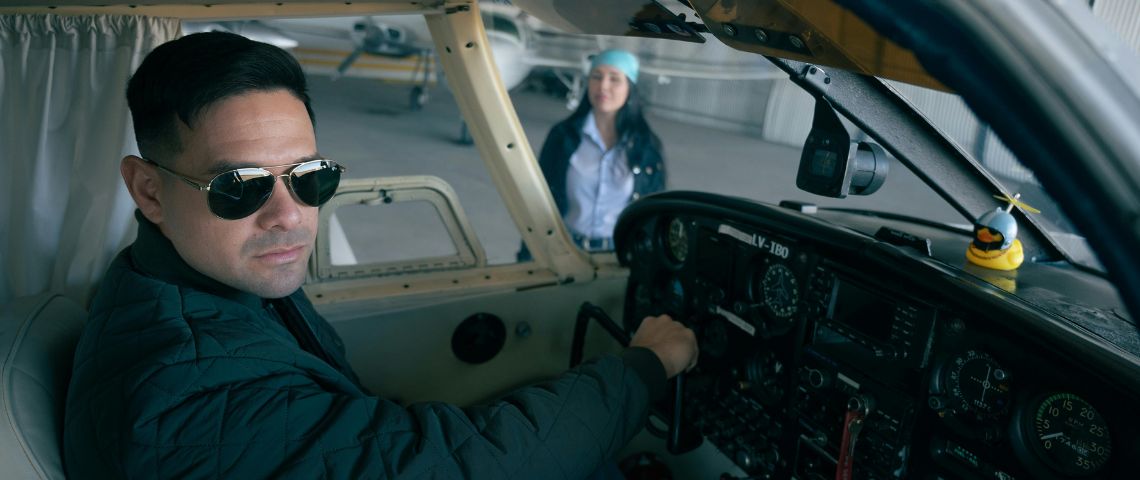
For a student pilot choosing a training environment, or an experienced pilot choosing where to rent for proficiency or time-building purposes, these cognitive principles translate into concrete evaluation criteria that are worth taking seriously.
Ask about fleet composition and aircraft consistency
A school or rental operation that maintains a mixed fleet of different aircraft types, configurations, and avionics suites may offer flexibility, but that flexibility comes at a cognitive cost for any pilot who trains regularly there. The more varied the aircraft a student flies, the more reorientation overhead is incurred on each flight, and the more slowly type-specific automaticity develops.
The ideal training environment for a student pilot is one where the primary training aircraft is available consistently across the entire training program: the same aircraft or the same type with the same avionics configuration, flown from first dual through checkride. This is not always possible, but it is worth asking about. An operation that manages its fleet to provide this consistency is one that understands what consistent aircraft access produces in a student’s development.
Ask about maintenance quality and squawk resolution
The maintenance standard of a training aircraft directly shapes the cognitive environment inside it. A student who arrives for a lesson to find that the aircraft has an open squawk — a known issue that has been documented but not yet resolved — faces a choice between flying with that known uncertainty or canceling the lesson. Neither is a good training outcome.
An operation whose maintenance culture prioritizes resolving squawks before the aircraft returns to service, and that communicates transparently with pilots about the aircraft’s current condition, produces a training environment where background vigilance is not part of the cognitive budget for every flight.
Use the simulator to reduce avionics unfamiliarity before first flight
For pilots transitioning to a new aircraft type — or for students beginning training in a glass-cockpit aircraft — simulator time before first flight is one of the most efficient uses of training resources available. An FAA-certified simulator in the same configuration as the training aircraft allows a student to absorb the avionics workflow, practice the scan, and work through the initial unfamiliarity phase of a new system without spending cockpit time on it.
When a student arrives at their first dual flight having already spent several hours in a simulator identically configured to the aircraft, the avionics are no longer novel. The extraneous load of learning the interface has been converted into familiarity. The first dual flight can be about flying, not about learning the cockpit.
One Aircraft. One Avionics Suite. Less Cognitive Overhead.
Kodiak Aviation operates a single 2021 Cirrus SR20 G6 (N701YZ) at Falcon Field (KFFZ) in Mesa, AZ. Available at $285/hour wet, it flies with Garmin Perspective+ avionics, CAPS, ESP, and a maintained logbook that every pilot can read before they book. Our FAA-certified Cirrus Flight Simulator is available at $100/hour — fully loggable and identically configured to the aircraft, so time in the sim directly reduces unfamiliarity overhead in the cockpit.
Whether you’re a student pilot managing your first cross-countries, an instrument-rated pilot working through procedural complexity, or an experienced renter who wants to fly a known, trustworthy aircraft — the consistency of a single, well-maintained platform is a cognitive asset. Come fly an aircraft that gets out of your way and lets you fly.
📍 Falcon Field (KFFZ), Mesa, AZ | 📞 (480) 568-3795 | ✉️ info@kodiakaviationco.com
Book at kodiakaviationco.com
Sources and references: Cognitive Load Theory: Sweller, J. (1988). Cognitive load during problem solving; PMC, “Pilot turning behavior cognitive load analysis in simulated flight” (2024, citing Wang 2023 and Cognitive Load Theory foundations); Frontiers in Neuroergonomics, “Pilot mental workload analysis in the A320 traffic pattern based on HRV features” (October 2025); MDPI Aerospace, “Quantifying Pilot Performance and Mental Workload in Modern Aviation Systems” (July 2025); Situation Awareness framework: Endsley, M.R. (1988); FasterCapital / aviation training research, “Cognitive Load Management in Flight Training: Strategies and Challenges”; Purdue University dissertation, “An Application of Cognitive Load Theory: Assessment of Student Pilot Performance” (2019); MDPI Applied Sciences, “Recognition of the Mental Workloads of Pilots in the Cockpit Using EEG Signals”; SMU/DTIC research on composite cognitive workload assessment in aviation.
Aircraft Rental at Falcon Field: Everything You Need to Know About KFFZ
READ STORY