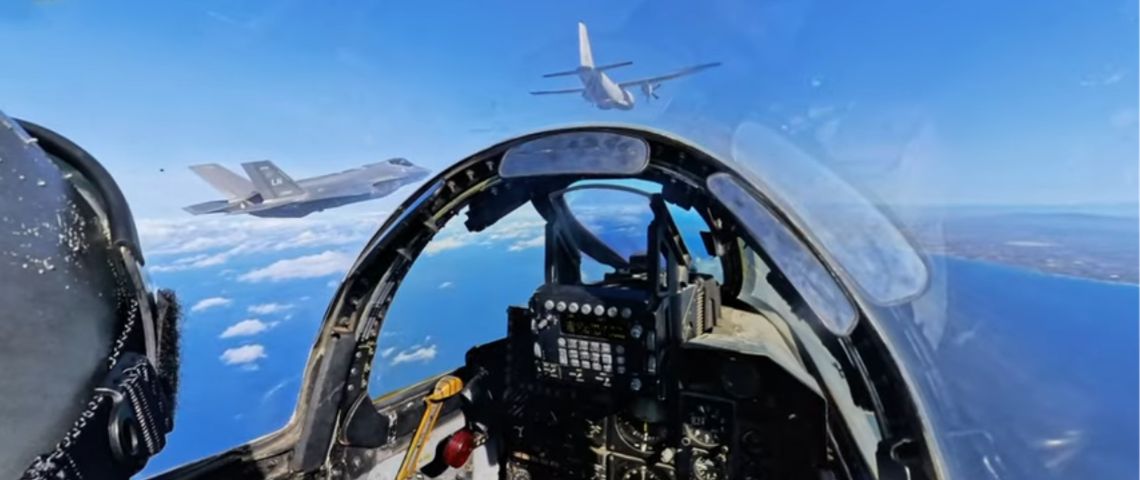
Time Building Isn’t Just About Hours — It’s About Quality Flying
March 17, 2026
There is a number tattooed on every serious pilot’s brain. For the private certificate, it’s 40 — the FAA minimum. For commercial, it’s 250. For an airline transport pilot certificate, it’s 1,500. These numbers are real, they matter, and no one disputes that you need to accumulate them. But somewhere along the way, a large portion of the pilot community started treating those numbers as the goal rather than a threshold.
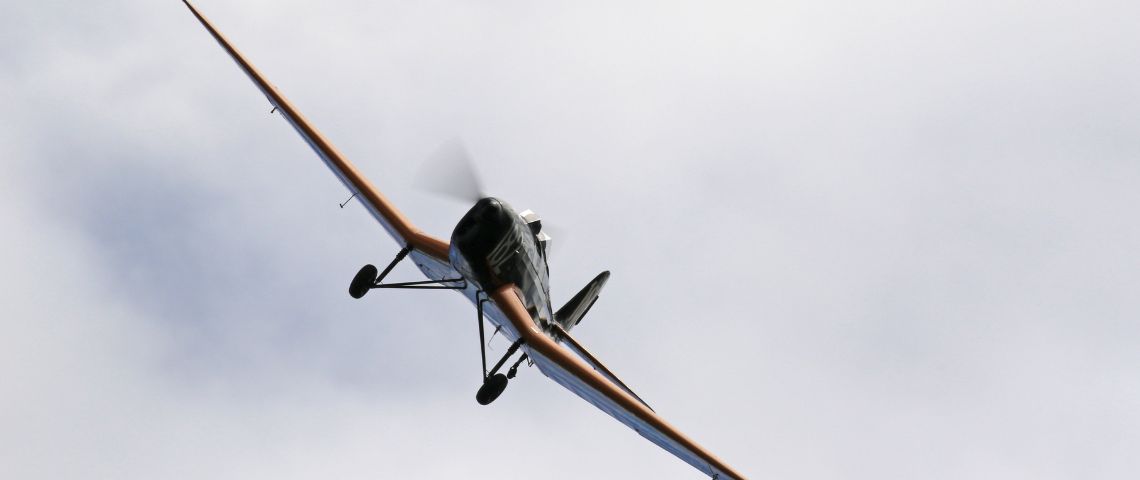
That shift in thinking produces a specific kind of pilot. One with a full logbook and gaps in judgment. One who can talk you through an ILS approach on paper but freezes when the automation does something unexpected. One who spent 300 hours flying the same VFR pattern in a 40-year-old trainer with six round gauges, and now sits across from an airline interviewer being asked how comfortable they are with glass cockpit avionics.
The hours still matter. But how you build them matters more than most training programs will tell you.
A pilot with 500 hours of intentional, varied, challenging flying is not the same as a pilot who has repeated the same hour 500 times. The logbook looks identical. The capability doesn’t.
How Many Flight Hours Do You Actually Need?
Before talking about quality, it’s worth being clear about what the regulations actually require, because there’s a lot of noise in the market about what those numbers mean.
For a Private Pilot Certificate under FAA Part 61, the minimum is 40 total flight hours: at least 20 hours of dual instruction with a CFI, 10 hours of solo flight time, 3 hours of cross-country, 3 hours of night flying, and 3 hours of instrument training. Part 141 schools can reduce the total to 35 hours through structured syllabi and stage checks. In practice, neither number reflects what most students actually need. The national average to complete a private certificate is closer to 60 to 75 hours, depending on training consistency and the frequency of lessons.
Commercial requires 250 hours total under Part 61, including 100 hours as pilot-in-command and specific cross-country, night, and instrument time. The ATP certificate requires 1,500 hours total, with specific experience categories that airlines scrutinize closely during the hiring process.
Here’s the part that’s often glossed over: the FAA’s hour requirements are minimums, not benchmarks of competence. They describe a floor, not a ceiling. And reaching the floor does not automatically mean you’re prepared for what comes next.
“Every applicant shows up to an interview with a logbook. The number of hours in that book gets you in the room. What you did with those hours is what determines whether you walk out with a job offer.”
— Harbour Dollinger, Founder, Kodiak Aviation | Falcon Field, Mesa, AZ
The Problem With Chasing Hours
The phrase “time building” has always had a mechanical ring to it — as if accumulating flight time were like filling a tank. And to a certain extent, that framing is baked into the regulations themselves. Hours are measurable. Competency is harder to quantify. So the industry defaulted to hours as the primary proxy for experience, and a generation of pilots trained to fill logbooks accordingly.
The Flight Safety Foundation has written about this directly: “What is often overlooked in the pilot experience equation is the quality of flight time. Quality can encompass a number of factors, including training received, operational experiences, single-engine or multi-engine flight time, multi-crew operations and weather-related flight experience. Relying solely on a number does not effectively capture a pilot’s true experience.” That’s not a fringe position. That’s one of the most respected aviation safety organizations in the world making a straightforward argument that the logbook number is an incomplete measure.
The practical consequence plays out every day. A pilot who flew 300 hours in a well-maintained glass cockpit aircraft, covering varied routes, navigating real weather decisions, practicing instrument approaches in actual IMC, and debriefing each flight with attention to specific deficiencies — that pilot has built something qualitatively different from a pilot who covered the same total hours doing pattern work and $100 hamburger runs in clear weather. The logbook entries look the same. The capability does not.
What poor-quality time building looks like
There’s nothing wrong with building hours in a simple trainer. Every pilot starts somewhere. The problem is when the time-building strategy becomes explicitly about maximizing hours at minimum cost, with no deliberate attention to what those hours are actually teaching. That strategy tends to produce a few identifiable patterns:
- Flying the same routes repeatedly, building familiarity with a single airport environment rather than developing adaptable navigation skills.
- Avoiding challenging conditions — wind, crosswinds, reduced visibility, complex airspace — because those conditions slow you down and might require additional training.
- Logging hours in aircraft that bear no resemblance to what you’ll be expected to fly professionally, building habits around systems that don’t transfer.
- Flying without specific learning objectives, so each hour adds to the count without adding to the capability set.
The research on this is consistent. A pilot who maintains a steady weekly flying schedule and approaches each flight with a defined learning objective progresses faster and requires fewer hours overall to reach genuine proficiency. The inverse is also true: irregular training with long gaps and no deliberate structure extends the total time needed while undermining skill retention.
What Quality Flight Hours Actually Develop
Quality time building isn’t a slogan. It refers to something specific: flight experience that develops the skills, judgment, and avionics familiarity that translate to professional performance. There are a few dimensions that matter more than the raw hour count.
Situational awareness and aeronautical decision-making
Loss of Control In-Flight remains the leading cause of fatal accidents in general aviation. It is largely preventable, and it correlates strongly with a specific failure: pilots who have not built genuine all-attitude recovery skills because their training history kept them in comfortable conditions. Developing real situational awareness requires intentional exposure to conditions that require it — not recklessness, but deliberate, structured engagement with crosswinds, unfamiliar airports, complex airspace, changing weather, and scenarios that don’t resolve neatly.
A pilot who has encountered genuine decision points — real go/no-go calls, actual diversions, approaches in deteriorating conditions with an instructor present to provide safety and feedback — has developed something that straight-and-level pattern work cannot provide. That decision-making capability is exactly what airline interviewers and check airmen are looking for, and it’s among the hardest things to fake when you’re asked to demonstrate it on a sim ride or answer scenario questions under pressure.
Avionics proficiency and the glass cockpit gap
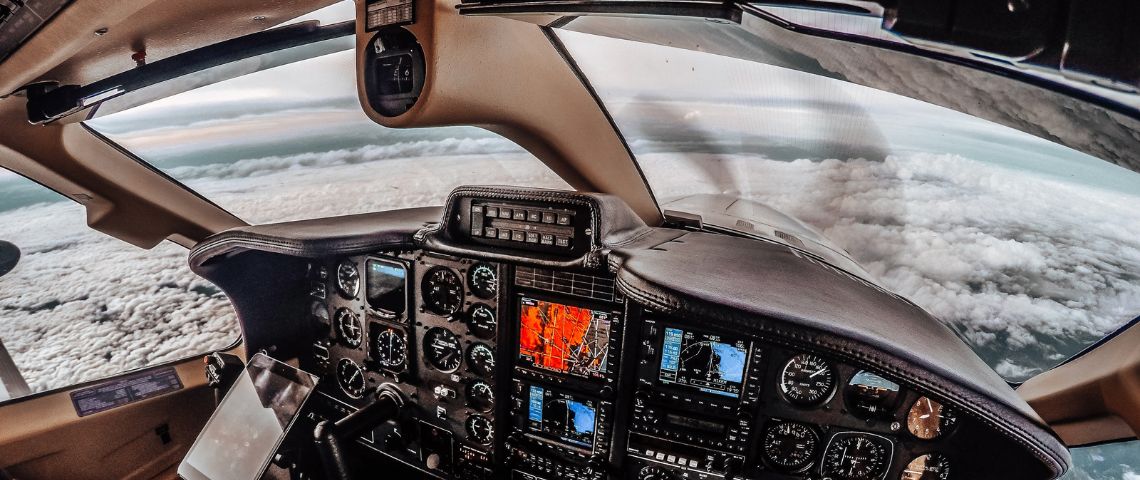
Here is a specific problem that affects a large number of candidates entering the airline pipeline today. They built the bulk of their flight hours in aircraft equipped with analog round-dial instruments — the “six-pack” setup that was standard equipment for decades. Then they arrive at a regional airline and step into a glass cockpit for the first time with hundreds of hours and almost no familiarity with integrated avionics systems.
The FAA recognized this problem formally. Since 2018, pilots seeking a commercial certificate can fulfill the 10-hour complex/high-performance requirement using a Technically Advanced Aircraft — defined as one equipped with an IFR-certified GPS moving map, a multi-function display (MFD), and an integrated two-axis autopilot. The regulatory acknowledgment was explicit: modern airline and corporate operations run on glass cockpits, and training experience in those environments matters.
More than 90 percent of new general aviation aircraft today leave the factory with glass cockpits. Training in analog instruments while building the hours that are supposed to prepare you for professional aviation means training for an environment that no longer represents where professional aviation actually operates.
The transition from analog to glass isn’t just visual. A glass cockpit aircraft — like the Cirrus SR20 G6 with Garmin’s Perspective+ avionics suite — presents flight data, navigation information, weather, traffic, and terrain in an integrated display architecture. Managing that information architecture is a skill. Understanding how to use the autopilot correctly without becoming dependent on it, how to interpret the MFD during a complex approach, how to cross-check the PFD during unusual attitude recovery — these are things you learn by flying the equipment repeatedly, not by reading about it.
Pilots who build meaningful hours in a TAA show up to their first airline sim ride with a foundational familiarity that shows. Those who didn’t spend time in glass cockpits often spend the first hours of their airline sim training just learning to read the displays before they can focus on learning the procedures.
Maintenance reliability and training continuity
There is a dimension of time-building quality that rarely gets discussed in the promotional materials: the aircraft itself. Time building programs that use aging, inconsistently maintained trainers introduce a specific form of training degradation that is easy to overlook until it accumulates into a real problem.
When an aircraft goes unscheduled maintenance, training stops. When it comes back with a persistent squawk that the school hasn’t resolved, you learn to work around the broken equipment rather than developing accurate aircraft knowledge. When the avionics are partially functional or outdated, you build familiarity with systems that don’t match anything you’ll fly professionally.
This sounds operational, but it’s fundamentally a training quality issue. Consistent training in a consistently maintained aircraft allows you to build real knowledge of what the aircraft is supposed to do, develop accurate mental models, and notice when something is genuinely abnormal rather than just being the way this particular airplane always behaves. Research from Embry-Riddle has shown that students who maintain steady, consistent training schedules — which require aircraft availability — progress faster and require fewer total hours to reach checkride-ready proficiency.
“We run one aircraft and we maintain it like an airline. Every squawk gets resolved before the aircraft goes back in service. A student shouldn’t have to adapt their training to work around something broken on the airplane. That’s not time building — that’s just flying a broken airplane and hoping nothing comes of it.”
— Harbour Dollinger, Founder, Kodiak Aviation | Falcon Field, Mesa, AZ
Why Quality Hours Change Your Career Trajectory
The connection between how you build flight hours and where those hours take you professionally is more direct than most flight training programs acknowledge in their marketing. Here is how it plays out concretely.
Interview performance
Airline hiring interviews are structured to probe whether a candidate understands the aviation environment they’re entering — not just whether they can recite regulations. Scenario-based questions about aeronautical decision-making, systems questions about avionics, CRM questions about crew coordination in abnormal situations — these are areas where the quality of your flight time shows, because they require experience you can’t get from a ground school course.
Candidates who have built hours in modern TAA aircraft, made real decisions in complex conditions, and operated avionics that resemble what they’ll be flying professionally tend to answer these questions with specificity and confidence. Candidates who spent the bulk of their time building hours in simple trainers under ideal conditions tend to answer in generalities. Interviewers notice the difference.
Sim ride performance
The regional airline sim ride is many pilots’ first extended exposure to a glass cockpit environment under evaluation conditions. Candidates who have never managed an integrated avionics suite — who have never used an FMS, who are unfamiliar with autopilot mode annunciations, who have not developed the scan pattern that glass cockpit flying requires — spend a significant portion of their sim check just orienting to the interface. That leaves less cognitive bandwidth for what the check airman is actually evaluating: decision-making, systems knowledge, CRM, and procedural compliance.
Candidates with glass cockpit experience arrive at the sim ride with the interface already familiar. They can focus on learning the airline-specific procedures rather than figuring out how to read the displays. That matters. Training departments notice which new hires require the most remedial time before they’re line-ready, and that pattern follows candidates into their early career performance evaluations.
Confidence and retention in recurrent training
Beyond the initial hire, the quality of the foundation you built during time building affects how you absorb recurrent training throughout your career. Pilots who built genuine skills — who flew with attention, debriefed seriously, and developed the habit of treating each flight as a learning event — tend to retain training more effectively and progress through recurrent checks with less difficulty. The habits formed during time building don’t disappear when you get a type rating. They compound.
A More Intentional Approach to Time Building
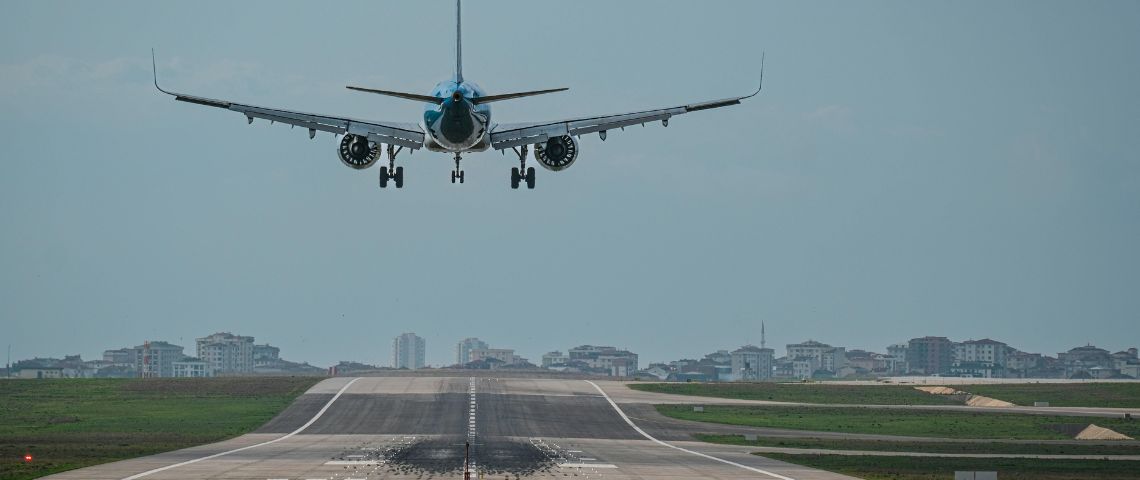
None of this means you need to spend a fortune or fly exclusively in premium aircraft to build meaningful hours. It means treating every flight as a training event rather than an entry in a logbook.
Fly with objectives, not just destinations
Each flight should have a defined learning goal beyond getting from point A to point B. That might be a specific approach you’ve been practicing, a weather decision scenario you’ve been wanting real experience with, or a navigation procedure you want to fly without using the GPS as a crutch. A pilot who debrief each flight against a specific objective — what did I intend to work on, how did it go, what do I need to do differently — accumulates genuine skill far faster than one who flies without that structure.
Use the simulator for what it’s best at
FAA-certified flight simulators are not inferior to the aircraft — they’re different, and for certain training objectives, they are actually superior. A fully loggable simulator lets you practice instrument approaches in weather that wouldn’t be safe in the actual aircraft. It lets you run emergency procedures repeatedly until the memory is automatic. It lets you pause a scenario, discuss the decision point, and run it again. That kind of deliberate, repeatable practice is extremely difficult to replicate in the air.
For pilots building time toward commercial and instrument ratings, building a meaningful portion of instrument currency in an FAA-certified simulator makes both training and financial sense. The hours count, the cost is lower than the aircraft, and the quality of instrument procedure practice in a well-maintained sim can exceed what’s possible in IMC where safety management competes for attention.
Prioritize avionics-familiar environments
If professional aviation is your goal, the aircraft environment you train in should approximate the professional environment you’re training toward. That means glass cockpit experience. It means familiarity with moving map GPS navigation, with MFD management, with integrated autopilot systems. It means having enough hours in a TAA that the interface becomes second nature rather than something you’re still learning while the check airman watches.
This doesn’t require flying only the most expensive aircraft. But it does mean being deliberate about whether the aircraft you’re building time in is building skills that transfer — or habits that will have to be unlearned.
“We get pilots who come here specifically because they want to build hours in a modern aircraft rather than a trainer from 1978. That’s not snobbishness — that’s them doing the math on what kind of time building actually prepares them for what they’re trying to do. The SR20 with Perspective+ is the kind of glass cockpit environment you’ll step into professionally. That’s the point.”
— Harbour Dollinger, Founder, Kodiak Aviation | Falcon Field, Mesa, AZ
A Note on Hours for the Private Certificate
Most of this article has focused on career pilots, but the quality question applies at every level. If you’re working toward your private certificate and wondering how many flight hours you’ll need — the minimum is 40 under Part 61, but the national average is 60 to 75, and that gap is almost entirely explained by training quality and consistency.
Students who fly at least twice a week, maintain clear communication with their instructor about specific weak areas, and approach each lesson with defined objectives typically reach checkride-ready proficiency closer to the minimum end of that range. Students who fly irregularly, with long gaps between lessons, and without a clear framework for what each session is developing, often reach the checkride end significantly above the average — and with more anxiety about it, because the training was less systematic.
The money saved by flying in the cheapest available aircraft can be offset entirely — and sometimes exceeded — by the additional hours needed to reach proficiency when that aircraft is poorly maintained, when the training is inconsistent, or when the avionics environment creates confusion rather than building usable skills. Flying in a well-maintained, modern aircraft with a structured approach to each lesson is often both faster and more effective, even at a higher hourly rate.
The question isn’t just “how many flight hours do I need.” It’s “how many hours will I actually need to reach genuine proficiency” — and those two numbers are not always the same.
Flying With Purpose
The aviation industry will always have minimum hour requirements, and those minimums are not going away. They exist for good reasons: meaningful time in an aircraft, accumulated over real flights, across varied conditions, develops something that ground school cannot fully replicate. No one serious argues against that.
What the hour-focused mindset misses is that flying time is not inherently educational. It becomes educational through intentionality — through flights that have objectives, debrief seriously, engage with genuinely challenging conditions, and build upon each other in a coherent progression. That’s what separates a pilot who has logged 300 hours from one who has genuinely learned from them.
For career pilots, the consequences of quality time building show up in interview rooms, simulator evaluations, and line checks. For private pilots, they show up in how comfortable and capable you are when flying becomes genuinely demanding. In both cases, the pilot who built time with attention rather than just accumulating it shows up to those moments differently.
The logbook number is the ticket to the room. What you did with those hours is what happens after you walk through the door.
Build Hours That Actually Count.
Kodiak Aviation operates a 2021 Cirrus SR20 G6 (N701YZ) out of Falcon Field (KFFZ) in Mesa, AZ — a Technically Advanced Aircraft with Cirrus Perspective+ by Garmin, CAPS, and Electronic Stability and Protection. Rental is $285/hour wet. Our FAA-certified Cirrus Flight Simulator is available at $100/hour for fully loggable instrument practice, any weather, any day.
Every hour you build here is built in a glass cockpit environment. Not a museum piece — a modern TAA that mirrors the avionics environment you’ll step into professionally. That’s not an accident. That’s the point.
📍 Falcon Field (KFFZ), Mesa, AZ | 📞 (480) 568-3795 | ✉️ info@localhost
Book your session at kodiakaviationco.com
Sources and references: FAA 14 CFR Part 61 (aeronautical experience requirements); FAA FAQ on hourly requirements for pilot certification; Flight Safety Foundation, “Pilot Training and Competency”; FAA Rule Change 2018 — Technically Advanced Airplane definition (FAR 61.129(j)); AOPA, “Always Learning: Complex or Advanced” (2022); AOPA, “Technically Advanced Airplanes”; Embry-Riddle Aeronautical University training consistency research; FAA national average private pilot certificate completion hours (60–75 hours). All regulatory claims reflect current 14 CFR Part 61 requirements.
Aircraft Rental at Falcon Field: Everything You Need to Know About KFFZ
READ STORY