Renting Aircraft for Career Growth: A Smarter Path Than Rushing Ownership
March 12, 2026
Somewhere between earning a certificate and flying for a living, there is a phase of pilot life that rarely makes the highlight reel.
It is not the early days of training, when everything is novel and progress is visible. It is not the career endpoint, when schedules are built around the cockpit. It is the middle: the years when a pilot has real skill, real certification, and a real life that has been filling up with other non-aviation demands since the ink dried on their certificate. A job. A family. A mortgage. Obligations that do not care whether the aircraft is available or whether the weather is suitable.
In this phase, the question that most pilots quietly wrestle with is not whether they want to keep flying — they do — but how to make that feasible given everything else. The aviation industry’s conventional answer is often framed around ownership: buy your own aircraft, have it available on your schedule, build it into your life as a fixed asset. But for most pilots in this phase, ownership is not actually the answer. It is a solution that imports a separate set of demands into an already demanding life.
This piece examines the pilot career path from certificate to professional cockpit, the role that flight hours play at each stage, and why aircraft rental — done intentionally with the right aircraft and the right operator — is not a lesser substitute for ownership. For many pilots, it is the more strategically intelligent choice.
The pilots who make consistent progress toward professional flying are not always the ones with the most resources. They are the ones who fly consistently. Rental, done right, makes that possible in a way ownership often does not.
The Pilot Career Path: A Framework for Understanding Where You Are
The airline pilot career path is more standardized than most professional pipelines. The FAA has defined the certification milestones, the hour requirements are statutory, and the hiring process at both regional and major airlines is well-documented. What is less clearly documented is the experience between those milestones — the years spent accumulating hours, maintaining skills, and navigating the competing demands of a life that does not pause while a pilot works toward 1,500 hours.
Understanding where you are in the career path — and what the path actually requires next — makes it easier to make smart decisions about aircraft rental, training frequency, and how to allocate limited flying time and budget.
Private certificate: the foundation
The private pilot certificate is where most pilots begin. It establishes the legal right to fly for personal use, carry passengers, and operate in a range of airspace and weather conditions. It does not, in itself, advance a professional pilot career. What it does is open access to the experience needed to advance.
For pilots who earned their private certificate with a specific career goal in mind, the private is a starting point. For pilots who came to aviation as adults, earned their certificate while managing careers and families, and then found the pace of training slowing due to real-world constraints, it can become a plateau. Not by intention, but because the life that exists around aviation is continuously demanding priority.
Staying current at the private certificate level — flying at least every 90 days to maintain passenger currency under 14 CFR §61.57, revisiting the BFR requirement every 24 calendar months, building cross-country experience deliberately rather than waiting for it to accumulate — is the minimum viable activity for a pilot who intends to progress. Aircraft rental makes this accessible without the overhead of ownership.
The instrument rating: the first professional-grade credential
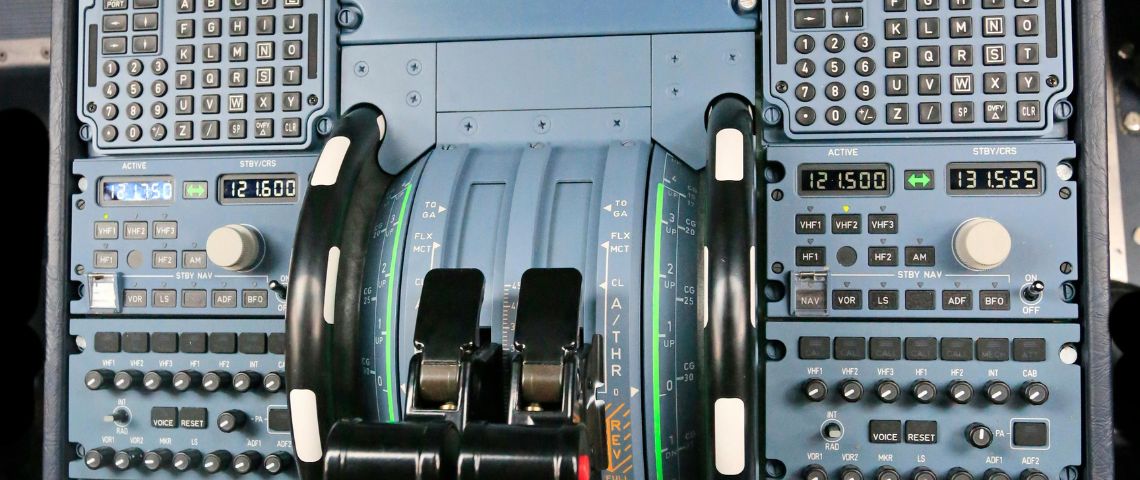
The instrument rating is the first certification that meaningfully expands both a pilot’s capability and their professional credibility. It permits flight under Instrument Flight Rules, opens access to Class A airspace, and — practically — removes weather as a constant constraint on whether a planned flight happens. For any pilot pursuing a professional path, the instrument rating is not optional.
The aeronautical experience requirements for the instrument rating include 50 hours of cross-country flight time as PIC, 40 hours of actual or simulated instrument time (with at least 15 hours in the category of aircraft sought), and the associated knowledge and practical tests. Those hour requirements are not achievable in bursts. They require sustained, deliberate flying over time — exactly the kind of flying that a reliable, well-maintained rental aircraft enables.
Pilots who allow a gap between their private certificate and their instrument rating often find the instrument work harder than it would have been if continued without interruption. The procedural discipline, the scan habits, and the cognitive fluency of operating under IFR require recency as much as initial proficiency. Consistent access to a capable rental aircraft during the instrument rating build is a direct investment in that proficiency.
The commercial certificate: the first professional milestone
The commercial pilot certificate is the first certification that allows a pilot to be compensated for flying. It requires a minimum of 250 flight hours, including specific cross-country, night, and instrument time requirements, along with demonstrated proficiency in commercial-grade maneuvers. It is the credential that separates a private pilot from one who is legally permitted to fly for hire.
For pilots on the airline path, the commercial certificate is a waypoint, not a destination. It must be held before the Airline Transport Pilot certificate, and the hours accumulated toward the commercial are hours that count toward the 1,500-hour ATP minimum. The quality of those hours — the variety of conditions, the complexity of the operations, the deliberateness of the flying — matters for the commercial checkride and for what comes after it.
This is one of the stages where access to a well-equipped rental aircraft pays dividends that extend beyond simple currency. Flying a modern, avionics-rich aircraft like a Cirrus SR20 G6 with Garmin Perspective+ avionics during the commercial build develops familiarity with integrated glass-cockpit environments that directly translates to the airline type training environment. Pilots who arrive at a regional airline’s training center having spent hundreds of hours in steam-gauge trainers sometimes find the transition to airline avionics more demanding than peers who built hours in modern glass.
The ATP certificate: the airline threshold
The Airline Transport Pilot certificate is the highest level of pilot certification the FAA issues, and since 2013 it has been the required credential for both captains and first officers in Part 121 air carrier operations — meaning all scheduled airline service. The standard ATP requires 1,500 total flight hours, including 500 hours of cross-country time, 100 hours of night time, and 50 hours in class. Pilots with qualifying aviation degree programs can earn a restricted ATP (R-ATP) at reduced hour minimums — 1,000 hours for a four-year aviation degree, 1,250 hours for a two-year program — but those reduced minimums come with limitations on acting as PIC until the full hour requirement is met.
For most pilots on the general aviation path, the gap between the commercial certificate and the ATP minimum is where the career either moves forward consistently or stalls. The 1,500-hour threshold is not reachable in a classroom. It is accumulated in cockpits, flight by flight, over months and years of active flying. For pilots doing this outside a structured training pipeline — without a CFI job or a commercial flying gig supplying hours at scale — aircraft rental is often the primary mechanism by which those hours are built.
“Most of the pilots I talk to who are working toward the airlines aren’t kids straight out of school. They’re adults who have careers, families, and mortgages, and they’re trying to build flight hours in the time that’s left over. What they need is not lectures about consistency — they know they need to fly more. What they need is an aircraft that’s actually available when their schedule opens up, that they know, that they trust, and that’s priced in a way that doesn’t make every flight a financial event. That’s what rental can be, when it’s done right.”
— Harbour Dollinger, Founder, Kodiak Aviation | Falcon Field, Mesa, AZ
Why Ownership Is Not Always the Smart Move for a Pilot in Career Build
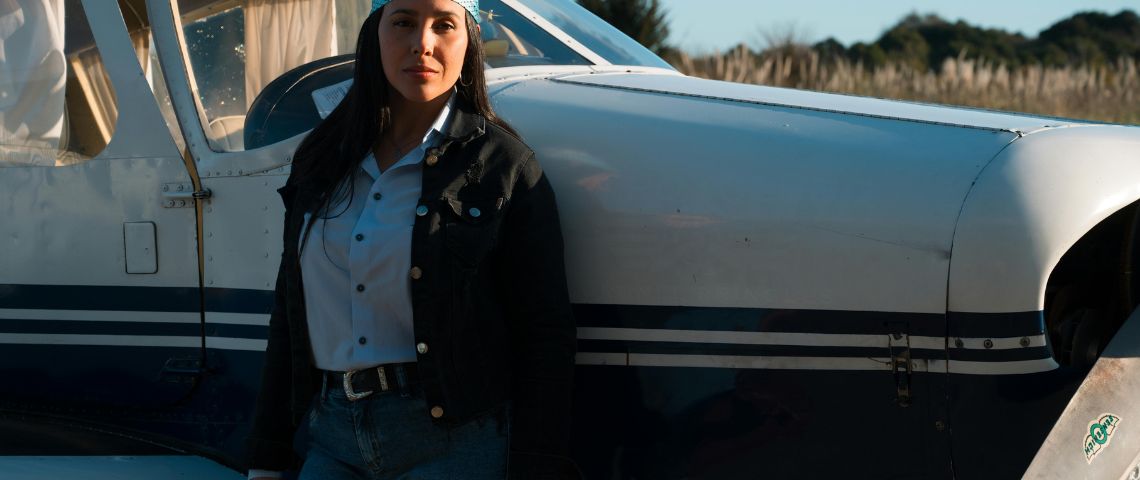
Aircraft ownership has genuine appeal, and there are circumstances in which it makes excellent sense. For a pilot who flies more than 150 hours per year, who has the mechanical aptitude or professional support to manage an airplane’s ongoing needs, and whose financial situation accommodates a significant illiquid asset — ownership can be the right call.
But for most pilots in the career-build phase — licensed, skilled, working toward professional hours while managing a demanding non-aviation life — ownership tends to import costs that are not visible in the initial purchase decision.
The carrying cost problem
Aircraft ownership involves two categories of cost: the variable costs that scale with flying (fuel, oil, consumables, the proportional maintenance attributed to flight hours) and the fixed costs that accumulate regardless of whether the aircraft flies at all. Hangar or tie-down fees, annual inspection, insurance, the avionics subscriptions that modern glass-cockpit aircraft require, and the reserve contributions that any mechanically honest owner makes toward eventual engine overhaul — these costs do not pause when life gets busy and flying frequency drops.
A pilot who owns an aircraft and flies 40 hours in a year is paying ownership costs on 8,760 hours of airplane ownership to fund 40 hours of flight. The effective per-hour cost of that flying, when fixed costs are fully loaded, is typically far higher than the hourly rate of a comparable rental aircraft. This is not a marginal difference. For a pilot whose flying frequency varies with the demands of a busy life, ownership consistently delivers worse per-hour economics than rental at any reasonable flying rate.
The maintenance burden problem
An aircraft that is owned requires the owner to manage its maintenance. That means scheduling and tracking the 100-hour and annual inspection cycles, managing the squawk list that accumulates with any actively flown aircraft, maintaining AD compliance, coordinating with a shop, and evaluating repair decisions that are sometimes expensive and technically complex.
For a pilot who is an A&P mechanic, or who has the time and interest to become deeply involved in their aircraft’s maintenance, this is a manageable and sometimes enjoyable part of ownership. For a pilot who already has a demanding career, a family, and a schedule that is fighting for every available hour — it is an additional administrative burden on a life that does not have spare capacity. The aircraft that was supposed to make flying more accessible becomes something else to manage.
The availability paradox
The central argument for ownership is availability: your aircraft is always there. But availability requires currency, and currency requires flying, and flying requires time. A pilot who owns an aircraft but flies infrequently due to life demands finds the aircraft waiting, the calendar slowly consuming time toward the BFR due date, and the gap since the last flight growing in a way that makes the next flight feel more consequential rather than less.
Well-run rental operations with consistent, known aircraft sidestep this paradox. The aircraft is available when the pilot is available — and when the pilot cannot fly for a period, there is no carrying cost accumulating on idle equipment. The pilot returns to the aircraft when they can, not when they must to justify the monthly costs.
A pilot who rents 60 hours per year from a quality operator, flying the same aircraft each time, accumulates more usable experience than a pilot who owns an aircraft that sits 90% of the time while its fixed costs accrue. Hours in a cockpit are what builds a career. Hours on a hangar floor do not.
How Intentional Aircraft Rental Drives Pilot Career Progression
The distinction that matters is not between rental and ownership. It is between passive access to an aircraft and intentional, structured use of that access. Aircraft rental is a career tool when a pilot uses it with purpose. It is not a career tool when it is occasional, reactive, or spread across unfamiliar aircraft in an inconsistent fleet.
Pilots who use aircraft rental effectively for career progression tend to share a few common practices that distinguish their approach from casual recreational flying.
They fly a single aircraft type consistently
The cognitive benefits of aircraft familiarity are well-established in aviation training research. A pilot who always rents the same aircraft — or at minimum the same type — spends less working memory on cockpit management and more on the quality of the flying itself. The aircraft becomes transparent. Procedures are automatic. The pilot is flying the flight, not the airplane.
For career-building purposes, single-aircraft consistency also means that the proficiency built on each flight transfers directly to the next. The SR20 pilot who has flown that specific aircraft 200 times has a calibrated mental model of its performance, its handling, its tendencies in various conditions. That model is an asset. Spreading 200 hours across a mixed fleet of different aircraft types produces currency without the same depth of type-specific competence.
They plan flights that target specific hour requirements
Random local flights build currency. Deliberate cross-country flying builds the specific hour categories that instrument ratings, commercial certificates, and ATP minimums require. A pilot who understands where they are in the certificate progression can design their rental flying to accumulate the right kinds of hours efficiently — cross-country PIC time, night flying, instrument conditions or simulated instrument under the hood with a safety pilot.
This requires knowing what you need and planning accordingly. The FAA’s hour requirements for each certificate level are public, detailed, and fixed. A pilot who has completed their private certificate and is working toward their instrument rating needs 50 hours of cross-country PIC time. A pilot working toward their commercial needs 100 hours PIC in complex or turbine aircraft or — under certain conditions — the aircraft they have access to. Understanding these requirements converts rental flights from generic flying time into targeted career advancement.
They use the simulator to extend their learning budget
An FAA-certified flight simulator provides loggable flight time at a fraction of the cost of aircraft rental, in conditions that can be set to exactly the training scenario the pilot needs. For instrument pilots, the simulator is particularly valuable: approaches in IMC, holding patterns, unusual attitudes, partial panel work, and emergency procedure practice are all available on demand, regardless of actual weather, without the risk profile of practicing emergencies in a real aircraft.
For career-oriented pilots who are budget-managing their training, the simulator-aircraft combination is the most efficient use of available resources. The simulator builds procedure fluency and instrument scan at low cost. The aircraft builds actual PIC time, real cross-country experience, and the logbook entries that ATP applications require. Using both deliberately and in combination produces better results, faster, than aircraft-only training.
They maintain regular flying even when they cannot fly optimally
The pilots who consistently reach career milestones are not necessarily the ones who had the most time or the most resources. They are often the ones who maintained the lowest acceptable minimum of flying activity during the periods when optimal flying was not possible. A 1.5-hour local flight on a clear Saturday morning does not build cross-country time. But it maintains stick-and-rudder currency, keeps the preflight habit sharp, and ensures that the next serious cross-country does not follow a three-month gap.
Aircraft rental enables this kind of minimum-viable-activity flying in a way that ownership sometimes discourages. The renter who flies a short local flight is spending only for that flight. The owner flying a short local flight is spending for that flight plus the daily carrying cost of the aircraft that has been waiting for them. The economics of rental favor flying when possible rather than postponing until conditions justify the fixed costs.
What Pilot Career Progression Actually Looks Like in the Middle
The airline pilot career path looks clean in a training program brochure. Private to instrument to commercial to CFI to regional to major, with approximate hour totals and time estimates at each stage. In reality, for pilots who are not in a dedicated full-time training pipeline, the path looks less like a straight line and more like a series of deliberate advances interrupted by periods where life demands more than flying does.
That is not failure. It is the normal experience of building a professional aviation career as an adult with competing obligations. What distinguishes the pilots who reach the ATP from those who plateau somewhere earlier is not talent or even raw time availability. It is the maintenance of a consistent minimum flying activity across all phases, including the demanding ones.
The working professional pilot
This pilot has a commercial certificate, probably an instrument rating, and a demanding career outside aviation that funds their flying. They fly somewhere between 40 and 100 hours per year, depending on what life allows. They are not building hours at the pace of a dedicated career trainee, but they are building. Their ATP horizon is measured in years rather than months, and that is acceptable to them, as long as they keep moving.
For this pilot, the economics of aircraft rental are favorable and the administrative simplicity of not owning an aircraft is a real quality-of-life benefit. What they need is a reliable, well-maintained aircraft they know well, an operator who keeps it available and properly maintained, and pricing that does not make each flight a deliberate financial decision that can be more easily deferred than made.
The parent or new spouse
Aviation careers do not pause when major life events happen, but they do often slow. The pilot who gets married, has a child, or takes on significant new family obligations will typically see their flying frequency drop, sometimes sharply. This is not a detour from the career path. It is a period of reduced pace, and what matters is that the pace does not drop to zero.
Aircraft rental is the most flexible option for this pilot. There is no aircraft to sell, no hangar lease to manage, no fixed cost arriving monthly regardless of flying status. When a window of available time opens — a partner who supports the flying, a grandparent who has the kids for a weekend, a rare Saturday with nothing scheduled — the rental aircraft is there. The career path continues, even if the pace has changed.
The career-changer
Some pilots come to aviation as a second career, having already built expertise and financial stability in another field. They often progress quickly through the certification path because they bring adult learning discipline, the financial resources to fly regularly, and a clear professional motivation. For these pilots, the question is rarely whether to fly — it is how to fly most efficiently toward the ATP minimum while managing the transition away from an existing career.
Aircraft rental with access to a modern, well-equipped aircraft is often the fastest and most cost-effective path to the ATP for this group. The alternative — purchasing an aircraft specifically to build ATP hours — ties up capital in an asset that depreciates, requires ongoing management, and may need to be sold when the airline career finally begins and the pilot has access to the cockpit time they need.
“I’ve had pilots come out here who are two years from the airlines and want to talk about whether they should buy a plane. My honest advice is almost always the same: don’t. Not because ownership is wrong, but because at that stage in a career, every dollar and every hour of management attention should be going toward building flight time and skills, not toward maintaining an asset. Rent something you know, fly it consistently, and get where you’re going. The aircraft ownership conversation can happen after the airline career is established, if it’s still interesting at that point.”
— Harbour Dollinger, Founder, Kodiak Aviation | Falcon Field, Mesa, AZ
What Career-Oriented Pilots Should Look for in an Aircraft Rental Operation
Not all aircraft rental is equal in what it provides for a pilot building toward a professional career. The criteria that matter for a career-oriented renter are somewhat different from those relevant to a recreational pilot, and it is worth being deliberate about where you rent and why.
Modern avionics that mirror professional environments
The aircraft type and avionics configuration you train in shapes what you are prepared for. A pilot who builds 800 hours in analog-instrument aircraft has those 800 hours, but may face a steeper transition when they arrive at a regional airline’s training center and find themselves managing an integrated glass cockpit for the first time under check airman observation.
Renting a modern glass-cockpit aircraft — the kind with a primary flight display, multi-function display, and integrated avionics suite — is a direct investment in career preparation. The specific systems differ between manufacturers, but the operating philosophy of integrated glass — the scan pattern, the automation management discipline, the situational awareness that a properly used MFD provides — translates. Hours built in a Cirrus with Perspective+ avionics are more directly applicable to a regional airline first officer seat than hours built in a 1970s Cessna with round-gauge instruments, all other things being equal.
Consistent availability and a single known aircraft
A rental operation that manages its fleet such that a specific pilot can reliably fly the same aircraft over dozens of hours builds the type familiarity that matters for career development. An operation where availability is unpredictable, where the aircraft frequently changes, or where squawks accumulate unaddressed forces the pilot to spend cognitive resources on aircraft management that should be going toward skill development.
Ask any operation you are considering renting from: how is availability managed? What is the typical notice needed to book a full-day cross-country? What is the maintenance response time when a squawk is reported? The answers tell you whether this is an operation built around pilot success or simply around aircraft utilization.
A checkout process that respects your existing proficiency
Career-oriented pilots often arrive at a new rental operation with significant experience. A checkout process that starts from zero — treating a 400-hour instrument-rated commercial pilot with the same protocol as a 60-hour private certificate holder — wastes time and signals that the operation does not differentiate between pilots at different stages.
A well-run operation calibrates its checkout to the incoming pilot’s actual experience. For an experienced pilot transitioning to an unfamiliar type, the checkout should cover the type-specific knowledge and handling characteristics that are new, without retreading ground the pilot demonstrably already holds. Efficient, appropriately calibrated checkouts respect the pilot’s time and money.
Keeping Aviation in a Life That Has a Lot of Other Demands
The pilots who keep aviation consistently present in their lives through demanding periods share a common trait: they treat flying as a scheduled commitment rather than an available option. Available options get displaced by urgent demands. Scheduled commitments get protected.
This sounds simple, but it is genuinely difficult when the competing demands are a job, children, a partner, and a household. It requires negotiating the value of flying time with the other people who have claims on the same calendar, being realistic about which periods of the year will allow consistent flying and which will not, and building a minimum viable flying schedule that keeps the career path moving even when it cannot move at full pace.
Aircraft rental supports this approach in ways that ownership makes harder. When flying is a scheduled, budgeted commitment, the rental model allows a pilot to book their flying windows, pay for what they fly, and account clearly for both the time and cost. When it is not possible to fly for a period, the rental model does not extract a carrying cost for the absence. The pilot who returns to the aircraft after a six-week gap is paying for the next flight, not for the six weeks they were not flying.
There is a version of aviation that pilots describe as “keeping it alive.” Not advancing at full pace, not flying as much as they’d like, but maintaining enough contact with the cockpit that the skill is preserved, the currency is maintained, and the career path has not been abandoned. Aircraft rental is what makes that possible for most pilots in the middle years of a career path that is real but not yet arrived. It is a tool, and like any tool, its value is proportional to how deliberately and consistently it is used.
Flexible Aircraft Rental for Pilots Who Are Still Building Toward Something.
Kodiak Aviation operates a single 2021 Cirrus SR20 G6 (N701YZ) at Falcon Field (KFFZ) in Mesa, AZ — available at $285/hour wet to certificated pilots with a completed checkout. The aircraft carries Garmin Perspective+ avionics, CAPS, and a fully documented maintenance record. Our FAA-certified Cirrus Flight Simulator is available at $100/hour, fully loggable, and accessible regardless of weather.
Whether you’re building cross-country time toward commercial minimums, staying current through a demanding season at work, or simply keeping aviation part of a life that has a lot of competing claims on your time — we’re here when you’re ready to fly.
📍 Falcon Field (KFFZ), Mesa, AZ | 📞 (480) 568-3795 | ✉️ info@kodiakaviationco.com
Book at kodiakaviationco.com
Sources and references: FAA 14 CFR §61.57 (recent flight experience / passenger currency); FAA 14 CFR §61.109–61.129 (instrument rating, commercial certificate aeronautical experience requirements); FAA 14 CFR Part 61 Subpart G (ATP certificate requirements and R-ATP provisions); ATP Flight School, “Airline Transport Pilot (ATP) Certification” (December 2025); AOPA, “Airline Transport Pilot”; Gleim Aviation, “Airline Transport Pilot Privileges and Requirements”; Flight Apprentice, “The Airline Pilot Career Path.”
Aircraft Rental at Falcon Field: Everything You Need to Know About KFFZ
READ STORY