Why Flying the Same Aircraft Type Builds Confidence Faster Than Switching Models
March 12, 2026
There is a pattern that shows up repeatedly in general aviation pilot training, and it rarely gets examined directly: the pilot who rotates through three or four different aircraft types while building their first hundred hours ends up less confident, not more versatile, than the pilot who flew the same make and model consistently over that same period.
It feels counterintuitive. More variety should mean broader exposure, right? More types handled, more cockpit configurations navigated, more adaptability built. The intuition makes sense on the surface. But in practice, the early phase of pilot training is not when variety produces the most return. It’s when it tends to impose the highest cost.
Understanding why requires looking at what is actually happening in the cockpit when you learn to fly a new aircraft — and what changes when you fly the same one again and again until it stops being new. This is not an argument against ever transitioning aircraft types. It is an argument that those transitions produce the most value when the foundational skills are already automatic, rather than when they’re still being built.
The pilot who can fly any aircraft is not built by flying many aircraft early. They’re built by flying one aircraft deeply, until the fundamentals become automatic, and then using that foundation to absorb every new type they encounter.
What’s Actually Happening in the Cockpit When You Learn a New Aircraft
Cognitive Load Theory, developed by educational psychologist John Sweller and well-established in aviation training research, describes how working memory — the part of cognition responsible for active processing and decision-making — operates under a finite capacity. When the demands placed on working memory exceed that capacity, the result is cognitive overload: the brain stops absorbing new information and shifts into a reactive, survival-mode processing state where the pilot is managing the moment rather than learning from it.
In pilot training contexts, this has a direct implication. Aviation training researchers at Embry-Riddle and other institutions studying cognitive workload in flight have consistently found that unfamiliarity with an aircraft’s physical and procedural environment is itself a significant cognitive load. When a pilot flies an aircraft they don’t know well, a substantial portion of working memory is occupied by orientation tasks that would be automatic in a familiar aircraft: Where is the fuel selector? What’s this switch? Is that trim feel normal? How does this particular airplane settle into final approach? These questions don’t disappear because the pilot is certificated to fly the category — they impose cognitive cost on every flight until the aircraft becomes genuinely known.
The cost is not just discomfort. It is a direct reduction in the cognitive bandwidth available for actual learning. A student pilot navigating an unfamiliar cockpit configuration while also trying to internalize crosswind correction technique, stabilized approach criteria, or ATC communication procedures is attempting to learn multiple things simultaneously with a reduced pool of processing resources. The tasks compete for the same limited capacity, and the result is that none of them are learned as deeply or as durably as they would be in an aircraft the student knows well.
The extraneous load problem
In cognitive load terminology, the mental effort spent orienting to an unfamiliar cockpit environment is called extraneous load — cognitive work that does not contribute to learning the target skill. When extraneous load is high, intrinsic load (the inherent complexity of the task being learned) and germane load (the cognitive work that actually builds schemas and skills) are crowded out. The student is using working memory to manage the environment instead of to learn.
This is why the transition to a new aircraft type is treated with such formality in professional aviation: type ratings, differences training, and initial operating experience requirements all exist to systematically reduce the extraneous load of flying an unfamiliar aircraft before operational demands are placed on the pilot. The airline pilot stepping into a new type for the first time does not do so while simultaneously managing passengers, weather, and a complex ATC environment — they do so in a simulator, with an instructor, in a controlled sequence specifically designed to convert the aircraft from unfamiliar to known before the real workload arrives.
The private pilot student or time-building pilot who rotates through multiple aircraft types is doing something structurally different: they are adding the extraneous load of aircraft unfamiliarity into every flight, including the flights that are supposed to be building the most important foundational skills of flying an aircraft. The cognitive math consistently works against them.
“I’ve watched students fly the same maneuver in three different aircraft in three weeks and wonder why it still doesn’t feel natural. The maneuver isn’t the problem. Every time they get in a different airplane, a chunk of their attention goes to just managing the cockpit again. They never get to the point where the airplane is transparent and they’re just flying. That’s where the real learning happens — when the aircraft gets out of the way.”
— Harbour Dollinger, Founder, Kodiak Aviation | Falcon Field, Mesa, AZ
What Aircraft Familiarity Actually Builds Over Time
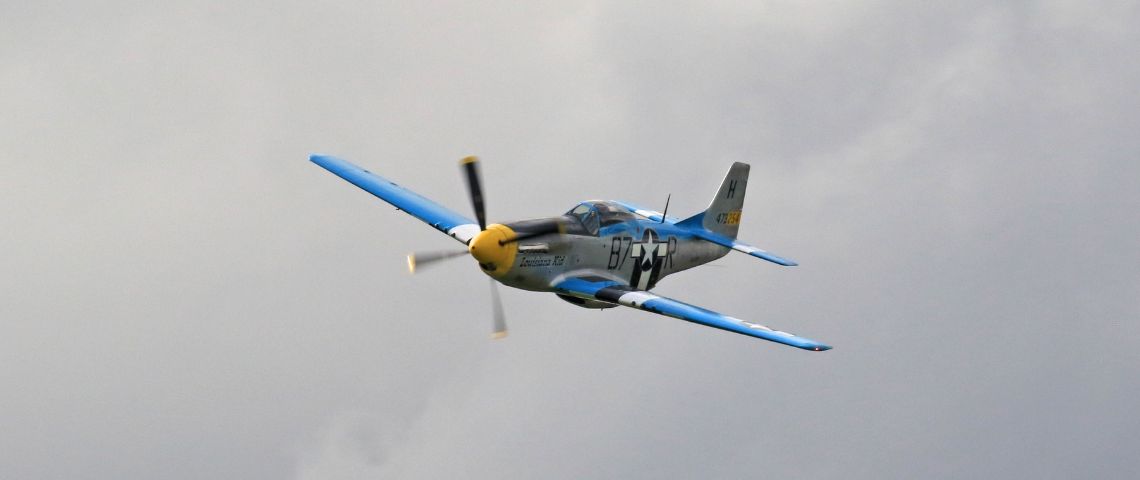
When a pilot accumulates genuine familiarity with a specific aircraft — not just logged hours in the type, but real, repeated exposure to the same airframe until its characteristics become second nature — what they are building is a category of knowledge that cognitive scientists call tacit or procedural knowledge. This is the kind of knowing that lives in the body and the reflexes rather than in explicit recollection: the feel of the flare, the sound of the engine at the right power setting on final, the precise amount of aileron the aircraft needs in a fifteen-knot crosswind, the way the controls load up at a specific airspeed.
This tacit knowledge cannot be built quickly, and it cannot be built by reading or briefing. It accumulates through repeated exposure to the same aircraft, in the same configurations, in varying conditions, over enough repetitions that the patterns become automatic. It is the foundation of what experienced pilots describe as “feeling” the aircraft — the ability to detect subtle deviations from normal before they appear on any instrument, to anticipate what the aircraft will do next because you have felt it do that thing dozens of times before.
Automaticity and cognitive reserve
The psychological goal of repetitive practice in a consistent environment is automaticity: the state in which a well-practiced skill executes without requiring conscious attention. A pilot who has flown the same aircraft type long enough that their cockpit flows are automatic, that their scan pattern runs without deliberate effort, and that their control inputs in the traffic pattern require no active calculation has freed up a substantial reserve of working memory for higher-order tasks.
This is what experienced pilots are actually describing when they talk about flying becoming “natural.” It is not a mystical quality. It is the cognitive result of having practiced the constituent skills of flying an aircraft to the point where they no longer compete for the same working memory resources as situational awareness, weather judgment, ATC communication, and decision-making. The aircraft itself has become transparent — no longer an object of attention but a tool that operates in the background while the pilot’s attention is free to be occupied by the actual demands of the flight.
This automaticity is aircraft-specific in its early development. The pilot who has flown 80 hours in an SR20 has not built 80 hours of aircraft-independent automaticity that transfers seamlessly to the next type. They have built 80 hours of SR20-specific automaticity that will partially transfer to similar aircraft but will require recalibration when the handling characteristics, power settings, control feel, or avionics architecture change. The partial transfer is real and valuable. But the full depth of automaticity — the state in which the aircraft is genuinely transparent — only exists for the type that was flown to get there.
The confidence loop
Confidence in the cockpit is not primarily a psychological attitude. It is a functional state that reflects the pilot’s accurate assessment of their own capability relative to the demands of the flight. A pilot who is genuinely confident in their ability to land their specific aircraft in a fifteen-knot crosswind is not displaying bravado — they have done it enough times that they know what to expect and know how to respond. Their confidence is calibrated.
The connection between aircraft familiarity and well-founded confidence is direct: every repeated exposure to the same aircraft in varying conditions is another data point confirming or refining the pilot’s model of what the aircraft does and what they can do with it. After enough repetitions, the model is accurate and the confidence that flows from it is earned rather than assumed.
This is why student pilots who fly the same aircraft consistently report feeling “ready” for their solo or checkride more definitively than students who have been rotating through types. It is not that the rotational students have flown fewer hours. It is that the hours they have flown have accumulated less of this specific, calibrated confidence because each aircraft transition has partially reset the process. The pilot who rotates aircraft is perpetually at the beginning of the familiarity curve.
There is a version of 200 hours that feels like 200 hours. And there is a version that feels like 40 hours repeated five times in different airplanes. The logbook looks the same. The depth of knowledge does not.
What This Means for Time Building for Pilots
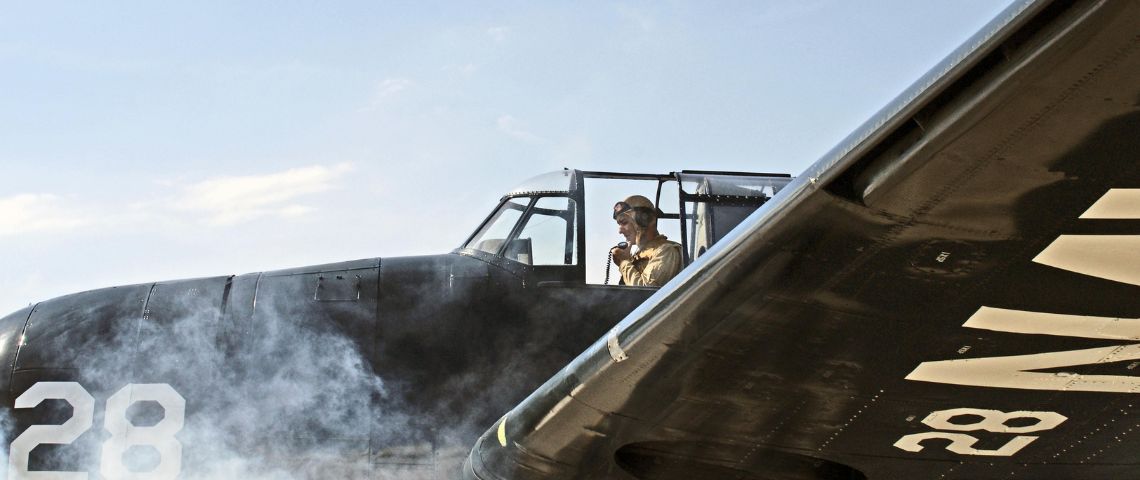
Time building for pilots — the process of accumulating flight hours toward certificate or rating minimums, or toward the 1,500-hour ATP certificate requirement — is often treated primarily as a quantity problem. The goal appears to be reaching a number, and the question becomes how to get there most efficiently in terms of cost and time.
This framing misses something important. The value of logged hours is not uniform. An hour logged in an aircraft you know deeply, where the aircraft is transparent and you are genuinely focused on developing judgment, practicing the demanding aspects of flight, and expanding your situational awareness and decision-making capability, is qualitatively different from an hour logged in an aircraft you are still orienting to. The hour logged in the familiar aircraft is building the skills that make you a better pilot. The hour in the unfamiliar aircraft is partly spent just managing the environment.
This does not mean time-building pilots should refuse to fly anything other than a single type indefinitely. It means that the return on time-building investment is highest when the aircraft is known, and lowest when it is not. A pilot working toward their commercial certificate who decides to accumulate their 250 hours across six different aircraft types because they want variety is paying more — in both cost and cognitive bandwidth — for each hour than the pilot who builds 200 of those hours in the same aircraft and transitions deliberately when the foundation is solid.
The quality versus quantity argument in time building
Interview panels at regional airlines and corporate flight departments have, for years, asked candidates to describe not just how many hours they have but what they did with them. A candidate who can describe 400 hours in a single aircraft type — with specific knowledge of its systems, its performance envelope, its behavior in demanding conditions, and the kinds of situations they navigated in it — is presenting a more compelling picture of actual competency than a candidate who can describe 400 hours across a dozen types without the same depth in any of them.
The FAA recognizes a version of this principle through the time-in-type requirements embedded in type rating programs and in the ATP certificate requirements that include specific single-engine and multi-engine hour breakdowns. The professional aviation world understands that hours in type mean something distinct from total hours, and that the competency being evaluated is aircraft-specific even when the underlying flying skill is general.
For the time-building pilot, the practical implication is that consistency is a strategic choice, not just a convenience. Choosing a single aircraft type and flying it until it is genuinely known — until the flows are automatic, the systems are understood at a level that supports genuine emergency management rather than just memorized procedures, and the handling characteristics are predictable enough to be exploited rather than just managed — is a higher-value use of time-building hours than rotating aircraft in search of variety.
“Pilots who come to us and say they want to build time often think the question is how many hours per week they can schedule. That’s part of it. But the bigger question is whether those hours are compounding on each other. Flying the same airplane builds a foundation where each flight adds to the last one. Switching types every few weeks means a portion of each flight goes to relearning what you already knew in the previous airplane. That’s not dead time, but it’s not as efficient as it looks.”
— Harbour Dollinger, Founder, Kodiak Aviation | Falcon Field, Mesa, AZ
The Psychological Dimensions of Aircraft Familiarity
Beyond the cognitive mechanics, there is a psychological dimension to aircraft familiarity that shapes the learning experience in ways that matter.
Anxiety, uncertainty, and learning
Learning to fly — and continuing to improve as a pilot — requires operating in conditions of managed uncertainty. The student in the traffic pattern is practicing a skill they have not yet automated in a dynamic environment where the consequences of errors are real. This inherent uncertainty is not a problem to be eliminated; it is the condition in which learning occurs.
But uncertainty about the aircraft itself — uncertainty about how this specific cockpit works, about how this aircraft responds to control inputs, about where the switches are and what they do — is a different category. It is uncertainty that does not produce learning; it produces anxiety and distraction. Research on cognitive load in pilot training has specifically identified the anxiety response to novel cockpit environments as a contributor to decreased performance and impaired learning retention. When the anxiety source is the aircraft itself rather than the demands of the flight, it is noise rather than signal.
The pilot who arrives at an aircraft they know thoroughly experiences a qualitatively different psychological state at the start of the flight. The aircraft is familiar. The preflight reveals the same condition it always reveals. The engine sounds like it always does. The controls feel like they always do. This baseline familiarity does not eliminate the challenge of the flight — the weather, the traffic, the approach, the judgment calls are all still there. But it removes the aircraft from the anxiety equation and frees the pilot’s attention for the things that actually deserve it.
The feedback loop of genuine mastery
One of the less-discussed psychological benefits of flying the same aircraft consistently is the quality of the feedback the pilot receives. In a known aircraft, deviation from normal is detectable. The crosswind landing that required more correction than usual stands out because the pilot knows what “usual” feels like in that aircraft. The approach that was slightly high is recognizable as such because the pilot has a precise model of what a stabilized approach looks and feels like at that specific airspeed in that specific aircraft.
In an unfamiliar aircraft, this sensitivity is absent. The pilot does not have a baseline for what normal feels like, so they cannot reliably detect what abnormal feels like. The feedback loop that drives skill refinement — perform, detect deviation, correct, improve — operates at full resolution only when the pilot has enough familiarity with the aircraft to perceive small deviations. Without that baseline, feedback is coarser and learning is slower.
This is the deep reason why experienced instructors often observe that students make more rapid progress in a familiar aircraft than in a new one, even when their total hours are similar. It is not that the familiar aircraft is easier. It is that the student can learn from it more precisely.
Confidence and decision-making under pressure
Pilot training research consistently identifies self-confidence as a meaningful predictor of training success — not the inflated self-confidence that leads to poor risk management, but the calibrated confidence that comes from accurately knowing one’s own capabilities and limitations. That accurate self-assessment is much more easily built in an aircraft the pilot knows deeply than in one they are still figuring out.
The scenario that illustrates this most clearly is emergency and abnormal procedure management. A pilot who knows their aircraft well enough that it is essentially automatic has cognitive reserve available precisely when the demand is highest. If an electrical anomaly appears, or an engine-out procedure needs to be executed, or a go-around decision needs to be made from an unstabilized approach, the pilot whose aircraft management is automatic can devote their full working memory to managing the situation. The pilot who is still orienting to an unfamiliar cockpit is managing the aircraft and the emergency simultaneously with a divided attention that makes both tasks harder.
Practical Implications for Students and Time-Building Pilots
For student pilots learning to fly
The most efficient path through primary training — by which I mean the path that builds the most durable skill per hour flown — is typically the one that minimizes aircraft variability in the early stages. Flying the same aircraft from first lesson to checkride, where the option exists, allows every hour to build on the last without the reset that accompanies aircraft transitions. The student who flew the same Cessna 172 from student pilot certificate through private pilot checkride has something the student who rotated through a 172, a Piper Warrior, and a Diamond DA40 does not: a genuinely deep model of one aircraft that serves as the scaffold for understanding every aircraft they fly afterward.
This does not mean primary training should be confined to a single aircraft in every circumstance. Exposure to different aircraft has genuine value once the foundation is established. But the foundation itself — the automatic cockpit flows, the calibrated landing judgment, the reliable scan, the genuine feel for aircraft performance — is built faster and more durably in a single, consistent aircraft than in a rotating fleet.
For time-building pilots after initial ratings
Pilots in the post-private, pre-commercial phase of their development are building hours toward either their instrument rating, their commercial certificate, or the ATP minimums that have become the de facto entry point for professional careers in the United States. For these pilots, the familiar aircraft argument applies with additional force.
The hours flown in this phase should be doing double duty: accumulating toward the required minimums while simultaneously building the depth of skill and aircraft knowledge that will be evident to evaluators and interviewers. Flying 200 hours in an aircraft well enough to genuinely know its systems, its weather performance, its instrument approaches in marginal conditions, and the specific judgment calls its performance envelope requires produces a more competitive candidate than 200 hours logged across multiple aircraft types at a shallower depth of familiarity in each.
The cost argument also favors consistency. A pilot who requires a checkout flight every time they switch aircraft types — with the associated CFI time and extended orientation period on initial flights — is spending money to manage unfamiliarity rather than to build skill. The same dollars spent in a consistent aircraft go further toward genuine capability.
For experienced pilots flying for currency
The currency-versus-proficiency distinction that the FAA makes explicit in its regulations — being current under 14 CFR §61.57 requires meeting minimum takeoff and landing recency requirements; being proficient requires the actual capability to fly safely in the conditions you intend to fly — is sharpest for pilots who fly infrequently in an aircraft they do not know well.
A pilot flying for currency in a consistently used aircraft is maintaining not just the regulatory minimum but a genuine, calibrated capability. A pilot flying for currency in an aircraft they use irregularly is checking a regulatory box in an aircraft whose characteristics they are partly relearning on each flight. The gap between those two situations is real, and it is most visible in the demanding phases of flight where the currency requirement was designed to ensure competence.
The FAA’s currency rules set a floor, not a ceiling. The pilot who exceeds those minimums in an aircraft they know thoroughly is building something that the pilot who barely clears them in a rotating fleet is not.
When to Move to a New Aircraft Type
Nothing in this argument should be read as a case against ever flying anything other than a single aircraft. The point is about sequencing and depth, not about variety itself. There is a moment in every pilot’s development when transitioning to a new aircraft type is the right call — when the current aircraft has been understood deeply enough that the transition becomes a learning exercise rather than a disruption to foundational skill development.
That moment is when the current aircraft is genuinely transparent: when flows are automatic, when the scan runs without deliberate effort, when normal and abnormal are distinguishable at a fine resolution, and when the pilot can walk into a flight in that aircraft with full working memory available for the demands of the specific flight rather than for managing the aircraft itself. At that point, a new aircraft type offers something valuable — the opportunity to generalize, to test what transfers and what doesn’t, to discover which skills are aircraft-specific and which are fundamental.
Before that point, the primary return on aircraft variety is extraneous load. After it, variety accelerates the development of the genuinely versatile, adaptable pilot that the aviation world values.
The practical question — “have I flown this aircraft long enough that it’s actually transparent?” — is one that honest self-assessment and a good flight instructor can answer. The answer is not in the logbook. It is in whether the aircraft still takes up working memory on a normal flight, or whether it has receded into the background where it belongs.
Build Real Familiarity. Fly the Same Aircraft Every Time.
Kodiak Aviation operates a single 2021 Cirrus SR20 G6 (N701YZ) at Falcon Field (KFFZ) in Mesa, AZ — available at $285/hour wet. One aircraft. One avionics suite. The same feel, the same flows, the same feedback every time you fly. Whether you’re a student building toward your private pilot certificate, a rated pilot accumulating time, or an experienced aviator staying proficient, consistent time in the same airplane is how real confidence is built.
Our FAA-certified Cirrus Flight Simulator is available at $100/hour for ground procedures, emergency flows, and instrument currency work — fully loggable and configured identically to the aircraft.
📍 Falcon Field (KFFZ), Mesa, AZ | 📞 (480) 568-3795 | ✉️ info@kodiakaviationco.com
Book at kodiakaviationco.com
Sources and references: Sweller, J. (1988), “Cognitive Load During Problem Solving,” Cognition and Instruction; Frontiers in Neuroscience (2024), “Pilot Turning Behavior Cognitive Load Analysis in Simulated Flight”; PMC/Frontiers in Psychology (2025), “Cognition in the Cockpit: Assessing Instructional Modalities in Pilot Training Simulations”; SM4 Global Aerospace, “Mitigating Cognitive Overload in Aviation Training Programs”; ScienceDirect (2022), “Aviation and Personality: Do Measures of Personality Predict Pilot Training Success?”; Magellan Jets, “What Is Pilot Time in Type?”; Elon Aviation, “Differences Training”; Whyte’s Wings, “Pilot Aircraft Familiarization: Building Confidence in the Cockpit”; FAA 14 CFR §61.57 (aircraft currency requirements); FAA 14 CFR §61.129 (commercial pilot certification requirements); Evionica, “What a Pilot Needs: Differences Training.”
Aircraft Rental at Falcon Field: Everything You Need to Know About KFFZ
READ STORY